Shared Hope International

Leading a worldwide effort to eradicate sexual slavery...one life at a time

  • The Problem
    • What is Sex Trafficking?
    • FAQs
    • Glossary of Terms
  • What We Do
    • Prevent
      • Training
      • Awareness
    • Restore
      • Programs
      • 3rd Party Service Providers
      • Stories of Hope
      • Partners
    • Bring Justice:Institute for Justice & Advocacy
      • Research
      • Report Cards
      • Training
      • Advocacy
  • Resources
    • All Resources
    • Internet Safety
    • Policy Research and Resources
    • Store
  • Take Action
    • Activism
    • Advocate
    • Just Like Me
    • Volunteer
    • Give
  • News&Events
    • Blog & Events
    • Media Center
    • Request a Speaker
    • Host an Event
    • Attend an Event
  • About
    • Our Mission and Values
    • Our Story
    • Financial Accountability
    • 2024 Annual Report
    • Leadership
    • Join Our Team
    • Contact Us
  • Conference
  • Donate
Home>Archives for Commentary

February 3, 2017 by Susanna Bean

Voices from the Field Part 2 – Survivor Interviews on Backpage.com

Since news broke that Backpage.com was shutting down the “adult services” section of its website,  reactions have ranged from joy to concern.   These reactions prompted conversations about the effectiveness of the shutdown in preventing child sex trafficking, concerns for potential detrimental effects, and questions about next steps.  We have written about our perspective on the shutdown and the report released by the Permanent Subcommittee on Investigations, “Backpage.com’s Knowing Facilitation of Online Sex Trafficking.” But the discussions that the news prompted are important, and to add to this dialog we are beginning a blog series featuring the voices of survivors and law Enforcement on the issue of Backpage.com and the online facilitation of sex trafficking. Tomorrow we’ll publish the last blog featuring these four survivors of sex trafficking on their perspectives on the Backpage.com debate. This is the second blog in that series. Read Part 1 here.


In this blog we interview four survivors of sex trafficking:

  • Tara Madison is a published author, speaker and a full time college student whose chief aim is to educate the public on the dynamics of human trafficking.
  • A Female Survivor
  • Kathy Bryan–A talented speaker, mentor, and author, Kathy attributes God’s amazing mercy and grace for the wisdom, joy and freedom she’s found after surviving two years of sex trafficking as a young teen. Kathy currently serves as Program Director and National Trainer for Rebecca Bender Initiative, passionately equipping thousands across the U.S. She has mentored hundreds of women, encouraging them as they journey towards truth, identity, and worth.  kathybryan.com.
  • A Male Survivor

Critics of the closure of Backpage.com’s “adult services” section have voiced concern that exploitation will take place in much more dangerous conditions, such as on the street, rather than via the anonymity of the Internet. What is your perspective on that argument?

Tara Madison: This is a biased argument. The concept that illegal sexual exploitation is safer from one’s own living room than on the street is only protecting the perpetrators of these illicit acts and not the victims. Victims of sex trafficking are in grave danger, regardless of the sale conditions! The anonymity of the internet only makes it harder to recover these victims whose lives are at risk!

A Female Survivor: “Conditions more dangerous?”—no.  When you are in a hotel room you don’t know who is going to walk in the door.  On the street, she actually has others around that might tip her off to the danger of a “bad trick”.  She will be more alert and will size up a person for danger.

Kathy Bryan:  I would never negate the fact that the comfort of a motel/hotel room is far better than the street, it totally is.  The truth is trafficking is incredibly dangerous wherever it occurs.  The main danger is from the trafficker and buyer, who will be present no matter the location.  Trafficking has been occurring since the beginning of time.  Telling ourselves that Backpage.com’s advertisement services somehow makes it safer and less harmful is an illusion at best, and a travesty at worst.  Yes, the victim didn’t have to go procure the buyer, which is much nicer, and could add a small measure of safety.  However, nothing makes the fact that you are being raped several times a day by someone, who paid to do it, easier to live with.  Not to mention, there are, unfortunately, a great number of other sites on which to advertise.

A Male Survivor: The argument is that Backpage prevents pimping under-aged youth from happening on the streets?  The only analogy I can think of is methadone and in that scenario, the fact that a person is using methadone instead of heroin, doesn’t change the fact that they are still a drug addict.  And to assert that Backpage makes pimping children safer, is simply outrageous.  This is another argument to assert Backpage should be allowed to facilitate illegal activity because they mean well.  Really?  Backpage wants to continue their facilitation because they mean well and cooperate with law enforcement?  It’s nothing to do with the billion dollar industry, it’s just because they care so much about the children, right?
February 2, 2017 by Susanna Bean

Voices from the Field Part 1 – Survivor Interviews on Backpage.com

Since news broke that Backpage.com was shutting down the “adult services” section of its website,  reactions have ranged from joy to concern.   These reactions prompted conversations about the effectiveness of the shutdown in preventing child sex trafficking, concerns for potential detrimental effects, and questions about next steps.  We have written about our perspective on the shutdown and the report released by the Permanent Subcommittee on Investigations, “Backpage.com’s Knowing Facilitation of Online Sex Trafficking.”  But the discussions that the news prompted are important, and to add to this dialog we are beginning a blog series featuring the voices of survivors and law enforcement on the issue of Backpage.com and the online facilitation of sex trafficking. For the next three days we will hear from four survivors of sex trafficking about their perspectives on the Backpage.com debate. This is the first blog in that series. Read Part 2 here.

In this blog we interview four survivors of sex trafficking:

  • Tara Madison is a published author, speaker and a full time college student whose chief aim is to educate the public on the dynamics of human trafficking.
  • A Female Survivor
  • Kathy Bryan–A talented speaker, mentor, and author, Kathy attributes God’s amazing mercy and grace for the wisdom, joy and freedom she’s found after surviving two years of sex trafficking as a young teen. Kathy currently serves as Program Director and National Trainer for Rebecca Bender Initiative, passionately equipping thousands across the U.S. She has mentored hundreds of women, encouraging them as they journey towards truth, identity, and worth.  kathybryan.com.
  • A Male Survivor

It has been argued that Backpage.com should be permitted to maintain its “adult services” section because its cooperation with law enforcement and NCMEC has led to the recovery of victims and missing minors through the information provided. What’s your perspective on that argument?

Tara Madison: The notion that Backpage.com has worked cooperatively with law enforcement in the recovery of victims is nil at best. Backpage.com has been held in contempt by the US Senate for refusing to turn over documentation in child sex trafficking investigations and the recent Senate hearing divulged that the corporation had been editing submitted ads to avoid detection of minors, along with informing their employees to only report the absolute minimal red flags in the instance of suspected child exploitation.

NCMEC claims that 71% of child sex trafficking cases in America are linked to Backpage.com ads. Over one million ads were being posted daily on this site for illegal sex, so to what degree do we measure “cooperation”? If a corporation or individual claims to be cooperating with law enforcement, why would that same corporation or individual be unwilling to cooperate with the government about the same matter?

A Female Survivor:  Maybe some, but how many have slipped though that net?  I have not had a conversation with a law enforcement officer that was thankful for that Backpage.com help.  Might possibly find missing minors but with or without Backpage.com children will still be sold. 

Kathy Bryan:  It sounds good, in theory.  However, that would be like saying don’t prosecute the alleged bank robber because he helped the little old lady cross the street, or has also assisted in the search for missing children in his area.  Assisting with something does not negate any criminal activity you also participate in.  Backpage’s involvement in human trafficking must be stopped, which, by the way, it hasn’t.  The ads have simply moved to another area of Backpage.com. 

Perhaps they have assisted law enforcement and NCMEC, however, it begs the questions how, and to what degree, when you read NCMEC’s own report detailing how little cooperation they indeed received from Backpage, despite intensive, ongoing efforts to work with them.  Here’s a link to it:   http://www.missingkids.com/Testimony/11-19-15

The real issue is we have a legal business profiting from the illegal sale of humans.  Trafficking people is illegal in the U.S.  Prostitution is illegal in most of the U.S., as is buying sex.  If I were found to have assisted or materially participated in any of those three crimes, I would be considered guilty of those crimes.  Backpage is not only assisting in the process of trafficking, they are making money from doing so!   If Backpage were supporting any other illegal endeavor such as advertising illegal drugs, murder for hire, etc., it would have been stopped long ago, and criminal charges would be made.  

One can purchase nearly anything on Backpage.  A home, couch, car, clothing, animals, and yes, humans. Interestingly, Backpage posts FREE classified ads EXCEPT for those advertising people.  Meaning they make money from the illegal activities of trafficking and prostitution, literally profiting from victimization.  Allow me one example of just how lucrative it is for Backpage.com to sell adult ads.  These are actual fees a fellow survivor knows were charged when she was sold.  One daily ad was $30, and a repost of that ad was $5 per day.  She was never advertised with less than four ads per day, and each was reposted five times.  So, 4 ads x $30 = $120, plus 5 reposts x 4 ads = 20 reposts x $5 = $100.  So, a daily charge of $220. After 365 days, this would have provided Backpage.com with $80,300 per year. This is from one victim!  Perhaps now you can see just how much advertising human trafficking lined their pockets.

A Male Survivor: I think the argument that Backpage should be allowed to continue potentially illegal activity because now they are cooperating with law enforcement is a bit like saying, a company that allows its members to hunt endangered wildlife should be allowed to continue because they don’t tell their customers the police are probably watching them.  It seems like a well-intentioned argument, but nonetheless, incredibly stupid.  If every illegal activity could be justified because the police “might” catch one of the criminals, what shouldn’t we allow?  It’s like saying let’s give members of organized crime a pass if they hand over one of their customers after an illegal transaction.  Thanks but no thanks.

January 3, 2017 by Sarah Bendtsen

California Recognizes Kids are Victims, Not Criminals

New law in line with national movement to protect juvenile sex trafficking victims

California’s SB 1322 went into effect on January 1.  This bill not only sparked a fiery discussion centered on one op-ed, it also led Assemblyman Travis Allen to introduce AB 1402 for purposes of repealing SB 1322. Contrary to sensational statements that SB 1322 “legalized child prostitution,” the 2016 bill clarified that children engaged in commercial sex are victims of sex trafficking, deserving of a protective, not punitive, response.

SB 1322 follows in the steps of legislation passed by 19 other states in the U.S. and recognizes that children who have been bought and sold for sex are victims of child sex trafficking. As victims of this crime, they cannot also be charged with or held liable for the crime of prostitution.  This bill is not only a vital step to fighting juvenile sex trafficking in the US, it is in line with the national movement to ensure state laws treat child sex trafficking survivors as victims instead of criminals.

Shared Hope advocates for non-criminalization legislation, like California’s SB 1322, because it is based on the empirical research into the nature of a child’s vulnerability and brain development. Extensive research shows that children who engage in commercial sex do so in an effort to survive, or because a manipulative adult reaps a direct and substantial benefit from the child’s victimization. Tucked inside the non-criminalization debate is the inarguable element that, in the same way a children cannot legally join the military, purchase alcohol, register to vote, or enter into a contract, a child cannot consent to selling sexual services or performances.

The passage of SB 1322 in September 2016 was a significant and imperative step in reconciling a glaring contradiction in California state law which allowed a child engaged in commercial sex to be both a victim of commercial sexual exploitation and an offender under the same prostitution statute. Removing criminal liability for an offense that a child cannot commit prioritizes the safety, welfare, development, and protection of all children.

For that reason, it is critically important in the fight against child sex trafficking to recognize that removing criminal liability for minors engaged in commercial sex does not incentivize adults who commercially sexually exploit children. Instead, making sure that the buyers and sellers of sex with children are the only possible offenders under prostitution laws de-incentivizes such behavior by removing the facade of “consent,” “willingness,” or “desire” of the child that offenders rely on to avoid culpability.

One commonly raised, but misguided, argument against non-criminalization for children is that such laws strip the criminal justice system of a tool that ultimately protects children from the injurious nature of commercial sex. In fact, treating children as criminal offenders, particularly as “prostitutes,” is stigmatizing and re-traumatizing. In the same manner that we do not arrest and treat child sexual abuse victims as delinquent children, we must require a protective response for children similarly abused through commercial sexual exploitation.

Shared Hope’s six years of research on best practices for writing laws to fight domestic minor sex trafficking show that California has joined 19 states and the District of Columbia in recognizing these realities and passing laws to end the criminalization of child sex trafficking victims. California follows in the footsteps of states across the nation, from Montana to Alabama, from New Hampshire to Illinois, from North Dakota to Connecticut, who already passed non-criminalization legislation.  SB 1322 is not an isolated state law, but instead brings California into the national movement of state legislatures rejecting outmoded ideas about the culpability of children for their own sex trafficking victimization and passing legal protections for them.

Ultimately, the laws governing a society reflect the attitudes and beliefs of that society. As a country, we have continuously demonstrated our commitment to protecting children from harm, and in the unfortunate moments that such harm cannot be prevented, we have collectively demanded that rehabilitation and refuge be provided for them. Victims of child sex trafficking are certainly deserving of these protections. Criminalizing children for the crimes committed against them is not only unjust and harmful; it is contrary to the ideals that we strive to reach for all of the nation’s children. SB 1322 is consistent with the growing national recognition of the need to protect rather than criminalize child sex trafficking victims.

December 27, 2016 by Jo Lembo

And It Comes Full Circle

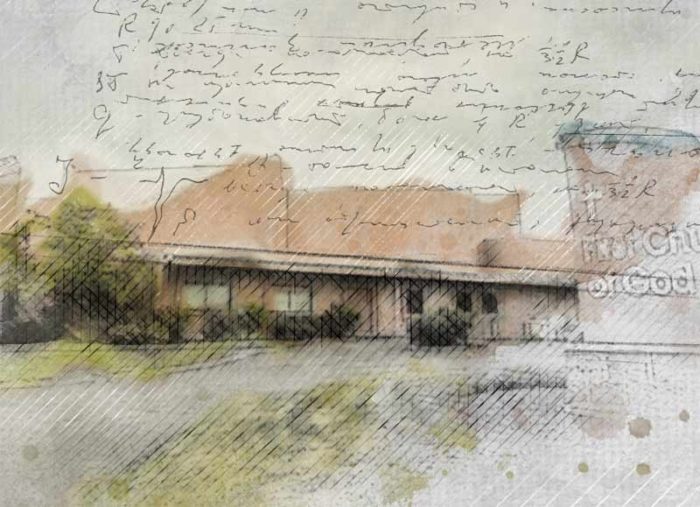
In September 2016, a community event was held in Vancouver, Washington, to educate the public about the signs of trafficking and how to protect our children. It was held in a church on NE 78th Street, and was attended by several law enforcement officers.  But it wasn’t just any church, and it wasn’t just any law enforcement in attendance. And it wasn’t just any citizens in the audience.

Seven years earlier, in the same church, a similar training had been held.

churchThe same law enforcement officers had come to hear Linda Smith share about the signs of trafficking, how it happens, what makes a kid vulnerable and what any citizen can do to help. When those uniformed officers left, they knew what they had been seeing, but hadn’t known what it was.  Now they began to see what had been in front of them all along.


A probation officer listened intently and left to go to the hospital where one of her charges was…again.  The teen had been beaten up again.  She’d run away again.  She’d been truant again.  Only this time, her probation officer knew the questions to ask her. And this time, the girl known as ‘Lacy’ felt safe enough to ask for help and was soon under police protection and moved 4,000 miles away for her safety.

In that room was a young man and his family.  They listened intently.  And just a short while later, when his friend asked him to help her move out and give her a ride back to Seattle to her newfound ‘friends’ after she brought back her dad’s car… well, Evan knew enough to ask questions and set in motion an intervention that saved Brianna’s life.

That night seven years ago, at that community presentation, the ordinary people in the room were instruments to help retrieve the two girls, whose story was later told in the video, Chosen. Lacy and Brianna were safe now because of a community presentation on the signs of trafficking.

And the video?  It was filmed in that same church, in their school hallway, stairwell and classroom. In 2016 it was shown to more than fifteen thousand teens across the nation. The difference in the film is stark: Lacy’s friends didn’t know what was happening to her or how to help her and she was enslaved for nearly two years. Brianna’s friend knew and took steps to rescue her and she was never sold into the horrific sex industry. The difference was knowing.

So in September, when we stood on the same stage in the same church, and talked to an audience of nearly 200 ordinary people, and showed Chosen, we were fully aware that the message had come full circle.  The officers who shared their stories and spoke in workshops were passionate to say, “You can prevent trafficking!  It will be people like you who make the difference. We didn’t know and then look what happened when we did know! You will be the eyes and ears to recognize the signs and warn young people so they’re smarter than the predators who would do them harm.  We will catch the bad guys, but please don’t make us rescue your kids too.”

And Brianna stood on the stage and shared how she was tricked. Because she didn’t know.

There we were, on the same stage with the same people who learned about trafficking seven years ago.  And look at all that has happened to educate young people across the nation. Now this crowd will make a difference because now they know.

It’s good to come full circle.

October 7, 2016 by Samantha

Condemning Pimping of Children on Backpage.com, finally.

On Thursday, news broke that Backpage.com CEO Carl Ferrer was arrested in Texas (on a California warrant) on felony charges of pimping a minor.  It’s about time.

It is rare to read a press release now that doesn’t mention Backpage.com as a factor in a child sex trafficking arrest. In fact, Shared Hope has tracked nearly 500 law enforcement press releases noting Backpage.com involvement.

Backpage.com has been fighting attempts by prosecutors, legislators and advocacy groups to stop the child sex trafficking that is occurring on their website and has been making them millions for years. Each day that passes sees more victims. Last month Shared Hope joined with leading advocacy organizations in an amicus brief to the U.S. Supreme Court in support of child victims suing Backpage.com for allowing their exploitation to occur on its website. This is just the latest in a long fight to stop Internet exploitation of children, with Backpage.com being the giant in the online classified industry where this exploitation is widely taking place.

In addition, the U.S. Senate held Backpage.com in contempt of Congress in March after it refused to comply with a subpoena in its sex trafficking investigation. TheSenate Permanent Subcommittee on Investigations has compiled a report on Backpage.com’s activities that demonstrates a purposeful and diabolical strategy to capitalize on the demand for commercial sex with children, and to make as much money as possible from this activity: the true definition of a facilitator of child sex trafficking.  Backpage.com refused to testify at a hearing on the report in November 2015, leading to the Senate voting to issue a contempt order – the first time in 20 years – against CEO Carl Ferrer.  Backpage.com then used every possible legal procedure to stave off producing its corporate communications to the PSI, appealing all the way to the U.S. Supreme Court where it finally ended with the order to comply.

California Attorney General Kamala Harris tells it like it is in the press release from her office: “Backpage and its executives purposefully and unlawfully designed Backpage to be the world’s top online brothel.”

Beyond the legal cases and breaking news is the reality of the thousands of vulnerable children being exploited on Backpage.com; many are still trapped and advertised on Backpage.com as you read this article.  As Shared Hope follows this case, we remain committed in our work to prevent the sale of children for sex, restoring survivors and bringing traffickers and predators to justice.

  • < Previous Page
  • 1
  • …
  • 4
  • 5
  • 6
  • 7
  • 8
  • …
  • 15
  • Next Page >
  • What We Do
  • Newsletter Signup
  • Take Action
  • Donate
Shared Hope International
Charity Navigator Four-Star Rating

STORE | WEBINARS | REPORTCARDS | JuST CONFERENCE
 
Donate

1-866-437-5433
Facebook X Instagram YouTube Linkedin

Models Used to Protect Identities.

Copyright © 2026 Shared Hope International      |     P.O. Box 1907 Vancouver, WA 98668-1907     |     1-866-437-5433     |     Privacy Policy   |   Terms of Service

Manage your privacy
SHARED HOPE INTERNATIONAL DOES NOT SELL YOUR DATA. To provide the best experiences, we use technologies like cookies to store and/or access device information. Consenting to these technologies will allow us to process data such as browsing behavior or unique IDs on this site. Not consenting or withdrawing consent, may adversely affect certain features and functions.
Functional Always active
The technical storage or access is strictly necessary for the legitimate purpose of enabling the use of a specific service explicitly requested by the subscriber or user, or for the sole purpose of carrying out the transmission of a communication over an electronic communications network.
Preferences
The technical storage or access is necessary for the legitimate purpose of storing preferences that are not requested by the subscriber or user.
Statistics
The technical storage or access that is used exclusively for statistical purposes. The technical storage or access that is used exclusively for anonymous statistical purposes. Without a subpoena, voluntary compliance on the part of your Internet Service Provider, or additional records from a third party, information stored or retrieved for this purpose alone cannot usually be used to identify you.
Marketing
The technical storage or access is required to create user profiles to send advertising, or to track the user on a website or across several websites for similar marketing purposes.
  • Manage options
  • Manage services
  • Manage {vendor_count} vendors
  • Read more about these purposes
Manage options
  • {title}
  • {title}
  • {title}
Shared Hope InternationalLogo Header Menu
  • The Problem
    • What is Sex Trafficking?
    • FAQs
    • Glossary of Terms
  • What We Do
    • Prevent
      • Training
      • Awareness
    • Restore
      • Programs
      • 3rd Party Service Providers
      • Stories of Hope
      • Partners
    • Bring Justice:Institute for Justice & Advocacy
      • Research
      • Report Cards
      • Training
      • Advocacy
  • Resources
    • All Resources
    • Internet Safety
    • Policy Research and Resources
    • Store
  • Take Action
    • Activism
    • Advocate
    • Just Like Me
    • Volunteer
    • Give
  • News&Events
    • Blog & Events
    • Media Center
    • Request a Speaker
    • Host an Event
    • Attend an Event
  • About
    • Our Mission and Values
    • Our Story
    • Financial Accountability
    • 2024 Annual Report
    • Leadership
    • Join Our Team
    • Contact Us
  • Conference
  • Donate