An American tradition since 1967, the NFL Super Bowl can easily be described as the biggest, wildest, most passionate, most glorified, and most flamboyant display of team loyalty of the year. On February 6, 2011, the play off of all play offs will be held in Arlington, TX at the infamous Cowboy’s Stadium which can hold up to 110,000 people. Between the crazy parties, the swarms of football fans, and the weeks of chaos leading up to this grand event, there is little room for error when it comes to protecting innocent children from being commercially sexually exploited by Super Bowl fans.
 Traffick911, Shared Hope International, and other advocates have partnered for the national I’m Not Buying It Super Bowl campaign, launched on January 7, 2011. The campaign aims to raise awareness and deter the purchase of children for sex during Super Bowl XLV.
While throngs of football fans are looking for a good time, some seek to commit the heinous crime of purchasing sex with a minor. This demand drives traffickers to recruit and transport women, teens, and children to the area to be used by fans for commercial sex acts—producing millions of dollars in profit for the trafficker. Local groups are already seeing the effect of this market dynamic as thousands of prostituted victims are being transported to the area with even more expected to arrive for Super Bowl XLV, according to recent research by The Shapiro Law Firm and the Dallas Women’s Foundation. They released a study this month revealing that as many as 740 underage minors are trafficked statewide every month.
We’ve issued a zero tolerance policy for child sex trafficking at the Super Bowl this year. Thankfully, a few other organizations have joined us in this stance, including local law enforcement.
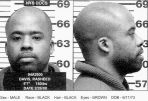
The area is uniting over this cause as billboards go up and police crack down. One billboard targets buyers by showing the mug shots of four convicted men who tried to buy sex in Arlington above the words “Dear John, You Never Know! This Could Be You.” If the prospect of being publicly humiliated doesn’t deter potential buyers, then perhaps they’ll run into one of the many police stings set up by Arlington Police Department.
With February 6 just around the corner, America’s youth need us to unite more than ever and take a stand for their freedom because pimps and “johns” certainly won’t. Join the I’m Not Buying Itcampaign to spread awareness and protect children from being enslaved in the commercial sex market this Super Bowl season. Get started by signing a petition to ask the Super Bowl Host Committee to endorse the I’m Not Buying Campaign. Your signature makes a difference.
*If you see a child in danger, dial 911 or contact the police immediately. You can also call the National Human Trafficking Hotline at 1-888-373-7888.
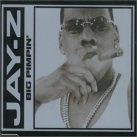 Jay-Z’s catchy hit from 2000, hasn’t lost any novelty during its ten year run in the music industry. It even costs $1.29 on iTunes—the price reserved for only the most popular songs within the virtual-jukebox—instead of the standard $.99. In a culture where pimps are idealized as wearing bright orange top-hats, luxurious furs and sporting fancy canes, who wouldn’t want to be “doin’ big pimpin’ up in NYC”? I offer two basic reasons why becoming a pimp can be so appealing in 2010, but please remember, my rudimentary analysis is by no means exhaustive. I simply suggest that the promise of being cool and making lots of money can be a deadly combination that has created an enticing outlet for the up-and-coming commercial sex entrepreneur.
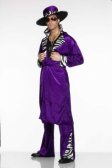 the “ghetto-fab” lifestyle. Just ask Border’s bookstore sales representative Margaret Rhatican about her experiences working in a place where you are sure to find the story of A Pimp’s Life within a series of books about “working the streets.” Just in case one needs a little extra guidance, Amazon offers The Pimp Game: Instructional Guide for pimps in training. In the world of cinema, movies like
 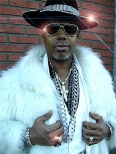 A pimp is not only a member of the “awesome-elite,” he’s rolling in the dough. It’s the most secure job in an un-secure economy. It’s “recession proof,” says Linda Smith in her book
 What can be done to take the glitter and glamor out of the pimp-life? Change the vernacular. Searching the words trafficker, rapist, or abuser does not elicit the same Google images of fur, hats, and fancy canes as the pimp search, but instead, reveals truer depictions of the atrocity associated with each term. This necessary shift will take time and a complete transformation in society’s ingrained perceptions. Would a different approach that could act as a catalyst for such a change be more effective? Demi Moore and Ashton Kutcher think it’s possible. They have started a trend focusing on positive reinforcement with the
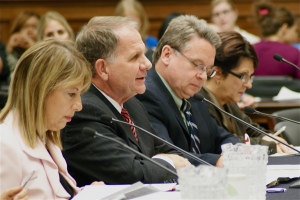 Sub-Committee on Crime and chaired by Representative Bobby Scott ( D-VA ), was to get input on The Domestic Minor Sex Trafficking Deterrence and Victims support Act of 2010 (H.R. 5575). The house legislation is a companion bill to Senate bill (S.R. 2925) introduced by Senators Ron Wyden (D-OR) and John Cornyn (R-TX).
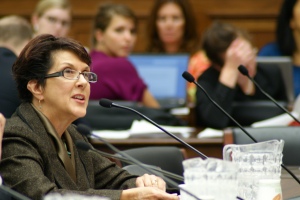 Linda Smith, founder of Shared Hope International and former Congresswoman, shared the story of a victim she had recently helped. Smith also addressed the demand side of the business – calling for tougher prosecution of the men who buy sex to deter demand for sex services from children.
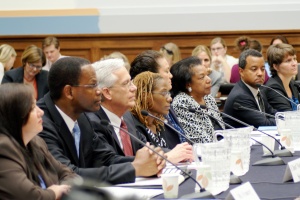 Service and Law Enforcement Relations, testified along with Craigslist counsel Elizabeth McDougall. Craigslist representatives said the closing of the adult section could be viewed as a step backward, since Craigslist collaborated with law enforcement and aided in capturing traffickers via that section of the Web site. They pointed out that venues like Backpage.com may not collaborate as efficiently with law enforcement to help build cases against traffickers selling minors for sex online.
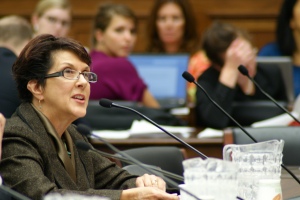
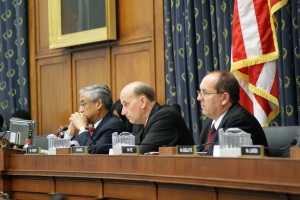 “Subcommittee will now come to order, and I am pleased to welcome you [to]…today’s hearing before the Subcommittee on Crime, Terrorism, and Homeland Security. The committee is hearing Domestic Minor Sex Trafficking and specifically,