Shared Hope International

Leading a worldwide effort to eradicate sexual slavery...one life at a time

  • The Problem
    • What is Sex Trafficking?
    • FAQs
    • Glossary of Terms
  • What We Do
    • Prevent
      • Training
      • Awareness
    • Restore
      • Programs
      • 3rd Party Service Providers
      • Stories of Hope
      • Partners
    • Bring Justice:Institute for Justice & Advocacy
      • Research
      • Report Cards
      • Training
      • Advocacy
  • Resources
    • All Resources
    • Internet Safety
    • Policy Research and Resources
    • Store
  • Take Action
    • Activism
    • Advocate
    • Just Like Me
    • Volunteer
    • Give
  • News&Events
    • Blog & Events
    • Media Center
    • Request a Speaker
    • Host an Event
    • Attend an Event
  • About
    • Our Mission and Values
    • Our Story
    • Financial Accountability
    • 2024 Annual Report
    • Leadership
    • Join Our Team
    • Contact Us
  • Conference
  • Donate
Home>Archives for Awareness

January 31, 2017 by Guest

Starbucks for the Win!

Some conversations are better had over a cup of Joe on a rainy day. That’s what I told the radio host when I emailed him earlier this month. He’s one of the most popular morning show hosts in America, but he’s just your everyday nice guy: humble, kind, and empathetic to his fellow man. He’s earned the respect of countless celebrities and the admiration of children, and bends the ear of millions of people each morning. (Literally, three million). When he says an artist is good, his listeners buy their records. When he says he’s raising money for cancer, his listeners donate. When he shows up at an event, tickets sell out. Bottom line: this dude has influence. I like him, and I like his style. So, I was pretty disappointed when I heard him relay his perspective on a situation that occurred in Spokane, WA.

Here are the basics: A male patron of Starbucks engaged in conversation with a female barista. He made a joke. She said he was funny. He thought she was flirting, slipped her a note asking her to dinner, and left. When he returned the next day, he was informed that he had been banned from that Starbucks location. The man felt he did nothing wrong, but was unjustly discriminated against due to his age.

My radio show host shared the story above, followed by his opinion, suggesting that the man was probably a good guy taking a risk in love, with innocent intentions. He argued that the girl “had flirted” with the guy, that she probably looked older, and that Starbucks made a bigger deal than necessary. He posed this question to his co-hosts on air: Did Starbucks overreact or not? In a matter of three minutes, with minimal facts at hand, they collectively agreed that Starbucks had overreacted and the man was a victim.

Here’s the rest of the story: He was 37, she was 16. He has a self-proclaimed mission to date the youngest women possible. He knows the legal age of consent in WA is 16, and that baristas must be at least 16 to work at Starbucks. He has an entire website devoted to “age-gap love” highlighting the benefits of very young women dating older men.

Despite not knowing all the facts, my radio host created a new narrative born of empathy and by projecting his own personal values on a stranger. He diluted the seriousness of the situation and dismissed any perception of wrongdoing. Effectively, he did the opposite of what he should have done, and in so doing provided a clear example of the cultural tolerance we’re fighting every day in the anti-trafficking movement.

We know that sex buyers are the driving force of the commercial sex trade. Yet, research by Shared Hope revealed a nationwide reticence to enforcing laws against sex buyers. The struggle facing these radio hosts in declaring someone a creep is the same struggle facing our community when it comes to addressing demand. We want criminals to fit a certain profile, so that we don’t identify with their traits. Therefore, if a sex buyer is successful, handsome, likeable, friendly, married and/or a parent, society may be inclined to downplay his behavior, to believe his excuses, to empathize with his plight. We may not arrest, charge, or prosecute his behavior. Our misguided perceptions about sex predators prevent us from seeing the reality.

[easy-tweet tweet=”Our misguided perceptions about sex predators prevent us from seeing the reality.” user=”SharedHope” hashtags=”HTAwarenessMonth” url=”http://bit.ly/2jSJcJZ”]

Just like the Starbucks guy, your friendly neighborhood sex buyers know the laws:

“By the way, guys…it’s a good idea to be extra careful around the South Kukui area. Much of that area is within 750 feet of a school, which can be used to increase the potential punishments for soliciting a decoy.”

                                                                                           –Redneck1, Honolulu (US Sex Guide)

Just like the Starbucks guy, your handsome neighborhood sex buyers want someone young:

“Her name was Monica. She’s about 5’3, skinny, braces, A-cup, curly brunette with highlights. She looked very young. She said she was 18. I asked for ID but she doesn’t have one. I asked her birthday. There was no hesitation in her voice and I believe her… If you see her, you will enjoy.”

-Playboy69, Baltimore (US Sex Guide)

And, just like the Starbucks guy, your successful neighborhood sex buyers believe they’re doing nothing wrong:

“Looks like Savannah PD had a very productive day yesterday. They got 4 girls for prostitution and 4 guys for pandering. They even charged one guy with pimping. With shootings, robberies, and murders on an almost daily basis I am glad to see area law enforcement have their priorities straight. Get out there and bust consenting adults for harming absolutely no one!”

                                                                      -PrinceAlbertco, Savannah (US Sex Guide)

These are the men who find communities online to share their sexual preferences, who create forums for discussion with like-minded guys that will encourage them to believe what they feel is: 1) normal, 2) acceptable, and 3) popular. It’s up to us to prove them wrong. So, when my kind and empathetic radio show host shared what appeared on the surface as a not-so-significant story, I felt compelled to tell him otherwise, and kindly show him why he was wrong.

The story wasn’t about commercial sex or age-gap love, it was about cultural tolerance. (Truth be told, Starbucks did what any dad would do for his kid, what any big brother or homegirl would do when a creep came around. They put the teen’s safety first, and had a cop on site to deliver their message. They handled it like a pro, and deserve to be recognized, not criticized.) In the end, I reminded him of this truth: Most of us don’t have a platform every day that reaches the masses. We’re just doing our part in our own little way with the few who will listen. Your voice matters… use it wisely, my friend.

To the reader, I say the same: Cultural change will take time and effort from us all. It will require uncomfortable conversations with friends and strangers, some of which are better had over a cup of Joe on a rainy day. In honor of Human Trafficking Awareness Month, it’s vital you know that your voice, your opinion, your influence matters.

[easy-tweet tweet=”It’s vital you know that your voice, your opinion, your influence matters.” user=”SharedHope” hashtags=”HTAwarenessMonth” url=”http://bit.ly/2jSJcJZ”]

By Elizabeth Scaife, Director of Training at Shared Hope International
 

January 26, 2017 by Guest

Becoming a Student Activist

As I grew up in the Northern Virginia area, I had no idea that children were being bought and sold for sex up and down the I-95 corridor just miles away from my childhood home and eventual college campus. I, like many people, was introduced to the issue of sex trafficking by unwittingly watching a documentary. Outraged by realities I had never been forced to consider, I immediately wanted to take action and create change. When it comes to an issue as vast as sex trafficking, it can be daunting to know where to even begin. You have passion, ideas, and know you can make a difference. If the question is “where do I start?” the answer is simple: where you are.

[easy-tweet tweet=”If the question is “where do I start?” the answer is simple: where you are.” user=”sharedhope” hashtags=”HTAwarenessMonth” url=”http://bit.ly/2knVDhJ”]

Being a student activist can be tough, but is not impossible. In an attempt to positively channel my outrage about sex trafficking, I worked directly with my university to start a grassroots effort within my campus community designed to develop student activists engaged in educating others about the realities of sex trafficking. Our group worked to provide our community with informational materials, documentary screenings on campus, and open conversations about difficult topics. While researching anything and everything I could find on the issue, I found Shared Hope’s website and was amazed by not only the scope of their work, but also the amount of resources available to me at no cost. Later that year I applied to the Arlington, VA office internship program for the summer 2013 semester and was selected; it’s an understatement to say that my internship experience at Shared Hope changed my life.

[easy-tweet tweet=”Young people are the future of the anti-trafficking movement.” user=”SharedHope” hashtags=”HTAwarenessMonth” url=”http://bit.ly/2knVDhJ”]

I am now a Shared Hope staff member, but because of my internship experience, one of my absolute favorite parts of my job is coordinating the Arlington, VA office internship program. Young people are the future of the anti-trafficking movement and their engagement is critical. Our interns consistently amaze me with their hard work, eagerness to learn, and unlimited talents. Each and every one of our incredible interns has played a crucial role by donating their time, contributing new ideas, working extensively with SHI staff on emerging projects. As a young person, it is imperative for you to know that your passion and efforts matter, your voice and experience matters, and you matter more than you know in the fight to combat sex trafficking. Shared Hope has quarterly undergraduate internship programs in both offices (Vancouver, WA and Arlington, VA) and would love for you to apply.

Learn more about our internship program and view application requirements: http://sharedhope.org/about-us/join-our-team/internship/

By Katie Shaver – Shared Hope International Program & Intern Coordinator

January 18, 2017 by Susanna Bean

Homeless Youth & Trafficking in Arizona

Any child in the US could be at risk of being trafficked, but a new study released this winter by the Arizona State University School of Social Work, and funded by the McCain Institute for International Leadership, highlights youth who face multiple vulnerabilities putting them at high risk for trafficking.

Homeless Arizona young adults, ages 18-25, were interviewed for this study.  Of the 199 homeless youth surveyed, one-third identified themselves as victims of sex trafficking.  By gender, 1 out of every 3 female study participants, and 1 out of 4 male respondents self-reported that they had been sex trafficked.

“When asked if they had been pressured or forced into having sex for money, drugs, food, clothing, a place to stay or for protection, 66 young homeless adults – one in three – identified as being a sex trafficking victim.” 1

It is not just homelessness that puts these youth at risk, but a confluence of factors.  The study found that drug and alcohol addiction, mental health issues or a history of dating violence or physical, sexual or emotional abuse are all vulnerabilities that traffickers seek to exploit.  Particularly concerning is the use of technology, and in particular the internet, to facilitate the exploitation of youth.

“Technology was found to have played a role in the sex trafficking victimization as respondents indicated that sex traffickers used smart phones, social media, websites like Backpage.com and Craigslist.org and apps like Tinder to reach sex buyers.” 1

Buyers’ increasingly easy access to trafficked youth via the internet highlights the need to address the demand for sex with minors.  In 2015 Shared Hope published a field assessment analyzing demand in Arizona.  The Demanding Justice Arizona Field Assessment explored criminal justice outcomes and dynamics, making recommendations for how the state can further combat demand to protect children from sex trafficking.

As a result of this research, Shared Hope advocates for strong anti-demand laws and enforcement to be implemented across the nation.  We also join the call to action of this study to focus interventions for sex trafficked youth on runaway and homeless youth and on the role of the internet in facilitating the sex trafficking of youth across the socio-economic spectrum.

With continued research, strengthened laws and trained professionals we can reach our vision of a world intolerant of sex trafficking and a community committed to restoring survivors.

—-

1All quotes come from the McCain Institute for International Leadership press release.

January 11, 2017 by Jo Lembo

You Never Know Who’s In Your Audience

Sometimes grassroots activists feel like they aren’t having a huge impact. Let me share two stories that may motivate you to keep on keeping on!

In 2009 there was a presentation on sex trafficking at the WA state criminal justice training center – a relatively new topic to the general public at the time. The leader from a local church security team attended as a matter of continuing his education on the threats against the youth in his church. After the first general session, he called one of his pastors and said, “You need to come down here and hear this. Our kids are at risk and we know nothing about this!” Clearing her schedule, the pastor arrived just in time to attend the community advocates workshop with Shared Hope International’s project manager. Following that workshop, the Renting Lacy book was distributed to each attendee.

The pastor took home the book and couldn’t put it down; becoming convinced she had to do something. That pastor was me (Jo Lembo). Today I work full-time for Shared Hope International and my husband’s life is also dedicated to fighting sex trafficking. Our head of security had no idea he was introducing me to my life’s calling. And that presenter had no idea that her presentation would completely alter the course of our lives. You never know the impact of the conversation you’re having. Who have you talked to?

[easy-tweet tweet=”You never know the impact of the conversation you’re having. – Shared Hope International Blog by Jo Lembo”]

Shortly after reading the book Renting Lacy, my husband and I met Linda Smith and her husband, Vern. I was passionate about making a difference, but felt I had no skills to truly make an impact.  I said to her, “I’m not really making a difference.  All I do is talk.  I talk to my hairdresser, to my neighbors, to our friends (we could bring down a dinner party in two minutes by sharing ‘what is happening right now just a few miles from this restaurant…’) But I don’t want to be just be a talking head!”

Linda’s response is now the byline for the Ambassadors nationwide.  She said, “Never underestimate the power of educating others.  The more people who know the signs of trafficking, the smaller the world becomes for those who buy and sell our children.”

Since that encounter, I have learned to share the message with hope and not stop at telling about the issue, but to share what you can DO about it. As the National Outreach Manager, it is my privilege to empower and equip the nearly 1000 Ambassadors nationwide who are ‘talking’ about the issue everywhere they go.

So if you feel ordinary, that’s exactly what we need!  People like you to know the signs and what to do to prevent sex trafficking.

Become a trained Ambassador of Hope and make a difference!

—

This blog is the first in a Shared Hope Blog Series for Human Trafficking Awareness Month. Stop back throughout the month to our New & Events page to read them all!


December 27, 2016 by Jo Lembo

And It Comes Full Circle

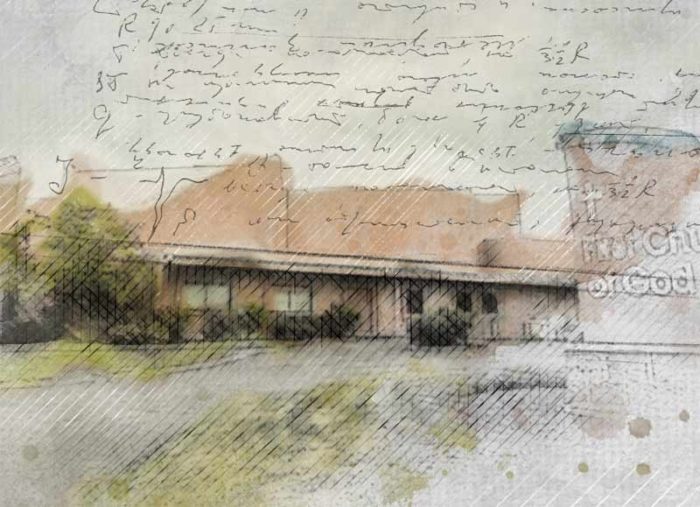
In September 2016, a community event was held in Vancouver, Washington, to educate the public about the signs of trafficking and how to protect our children. It was held in a church on NE 78th Street, and was attended by several law enforcement officers.  But it wasn’t just any church, and it wasn’t just any law enforcement in attendance. And it wasn’t just any citizens in the audience.

Seven years earlier, in the same church, a similar training had been held.

churchThe same law enforcement officers had come to hear Linda Smith share about the signs of trafficking, how it happens, what makes a kid vulnerable and what any citizen can do to help. When those uniformed officers left, they knew what they had been seeing, but hadn’t known what it was.  Now they began to see what had been in front of them all along.


A probation officer listened intently and left to go to the hospital where one of her charges was…again.  The teen had been beaten up again.  She’d run away again.  She’d been truant again.  Only this time, her probation officer knew the questions to ask her. And this time, the girl known as ‘Lacy’ felt safe enough to ask for help and was soon under police protection and moved 4,000 miles away for her safety.

In that room was a young man and his family.  They listened intently.  And just a short while later, when his friend asked him to help her move out and give her a ride back to Seattle to her newfound ‘friends’ after she brought back her dad’s car… well, Evan knew enough to ask questions and set in motion an intervention that saved Brianna’s life.

That night seven years ago, at that community presentation, the ordinary people in the room were instruments to help retrieve the two girls, whose story was later told in the video, Chosen. Lacy and Brianna were safe now because of a community presentation on the signs of trafficking.

And the video?  It was filmed in that same church, in their school hallway, stairwell and classroom. In 2016 it was shown to more than fifteen thousand teens across the nation. The difference in the film is stark: Lacy’s friends didn’t know what was happening to her or how to help her and she was enslaved for nearly two years. Brianna’s friend knew and took steps to rescue her and she was never sold into the horrific sex industry. The difference was knowing.

So in September, when we stood on the same stage in the same church, and talked to an audience of nearly 200 ordinary people, and showed Chosen, we were fully aware that the message had come full circle.  The officers who shared their stories and spoke in workshops were passionate to say, “You can prevent trafficking!  It will be people like you who make the difference. We didn’t know and then look what happened when we did know! You will be the eyes and ears to recognize the signs and warn young people so they’re smarter than the predators who would do them harm.  We will catch the bad guys, but please don’t make us rescue your kids too.”

And Brianna stood on the stage and shared how she was tricked. Because she didn’t know.

There we were, on the same stage with the same people who learned about trafficking seven years ago.  And look at all that has happened to educate young people across the nation. Now this crowd will make a difference because now they know.

It’s good to come full circle.

  • < Previous Page
  • 1
  • …
  • 5
  • 6
  • 7
  • 8
  • 9
  • …
  • 36
  • Next Page >
  • What We Do
  • Newsletter Signup
  • Take Action
  • Donate
Shared Hope International
Charity Navigator Four-Star Rating

STORE | WEBINARS | REPORTCARDS | JuST CONFERENCE
 
Donate

1-866-437-5433
Facebook X Instagram YouTube Linkedin

Models Used to Protect Identities.

Copyright © 2026 Shared Hope International      |     P.O. Box 1907 Vancouver, WA 98668-1907     |     1-866-437-5433     |     Privacy Policy   |   Terms of Service

Manage your privacy
SHARED HOPE INTERNATIONAL DOES NOT SELL YOUR DATA. To provide the best experiences, we use technologies like cookies to store and/or access device information. Consenting to these technologies will allow us to process data such as browsing behavior or unique IDs on this site. Not consenting or withdrawing consent, may adversely affect certain features and functions.
Functional Always active
The technical storage or access is strictly necessary for the legitimate purpose of enabling the use of a specific service explicitly requested by the subscriber or user, or for the sole purpose of carrying out the transmission of a communication over an electronic communications network.
Preferences
The technical storage or access is necessary for the legitimate purpose of storing preferences that are not requested by the subscriber or user.
Statistics
The technical storage or access that is used exclusively for statistical purposes. The technical storage or access that is used exclusively for anonymous statistical purposes. Without a subpoena, voluntary compliance on the part of your Internet Service Provider, or additional records from a third party, information stored or retrieved for this purpose alone cannot usually be used to identify you.
Marketing
The technical storage or access is required to create user profiles to send advertising, or to track the user on a website or across several websites for similar marketing purposes.
  • Manage options
  • Manage services
  • Manage {vendor_count} vendors
  • Read more about these purposes
Manage options
  • {title}
  • {title}
  • {title}
Shared Hope InternationalLogo Header Menu
  • The Problem
    • What is Sex Trafficking?
    • FAQs
    • Glossary of Terms
  • What We Do
    • Prevent
      • Training
      • Awareness
    • Restore
      • Programs
      • 3rd Party Service Providers
      • Stories of Hope
      • Partners
    • Bring Justice:Institute for Justice & Advocacy
      • Research
      • Report Cards
      • Training
      • Advocacy
  • Resources
    • All Resources
    • Internet Safety
    • Policy Research and Resources
    • Store
  • Take Action
    • Activism
    • Advocate
    • Just Like Me
    • Volunteer
    • Give
  • News&Events
    • Blog & Events
    • Media Center
    • Request a Speaker
    • Host an Event
    • Attend an Event
  • About
    • Our Mission and Values
    • Our Story
    • Financial Accountability
    • 2024 Annual Report
    • Leadership
    • Join Our Team
    • Contact Us
  • Conference
  • Donate