- June 21: Watch CNN’s coverage of the Do You Know Lacy? billboard campaign (video)
- June 16: The Family Research Council hosted a Protected Innocence Legislative Briefing (video)
- June 5: Do You Know Lacy? billboards challenge Seattle to help (print)
- June 3: The Seattle Times editorial board backs Do You Know Lacy? campaign (print)
- June 1: Seattle’s KCPQ coverage of SHI’s Do You Know Lacy? and Washington Assessment press conference
- June 1: Seattle Times – Campaign seeks to raise awareness of domestic minor sex trafficking (print)
- June 1: Watch Seattle’s KOMO 4 News coverage of SHI’s Do You Know Lacy? and Washington Assessment press conference (video)
- April 24: New law to battle Pierce and King County child sex trafficking (print)
- March 17: True Facts with Jon Leiberman interviews Samantha Vardaman and Virginia Del. Watts (radio)
- March 15: Family Research Council webcast on domestic minor sex trafficking (video)
- March 11: read the Arizona Daily Star’s story on the Arizona Report Card (print/online)
- March 10: KMSB-Tucson highlights the Arizona Report Card release (no longer available)
- March 9: the Las Vegas Sun covers progress on a meaningful Nevada bill (print)
- March 9: Arizona graded ‘C’ on curbing child sex trafficking (online)
- March 9: Arizona scores a ‘C’ in protecting victims of sex trafficking (online)
- March 9: Group gives Arizona ‘C’ grade in effort vs. sex trafficking (print)
- March 4: Read the Lubbock Avalanche-Journal’s recap of the Texas Report Card release (print)
- March 4: KIAH-Houston’s coverage of the Texas Report Card release
- March 4: San Antonio Express-News coverage of the Texas Report Card release (print)
- Feb. 20: The Arizona Rebublic highlights Shared Hope’s efforts in Arizona (print)
- Feb. 3: Watch SHI’s Taryn Mastrean on a live Family Research Council webcast (66th minute)
- Feb. 1: The Rutherford Institute mentions Shared Hope’s research (online)
- Jan. 31: MSNBC cites Shared Hope’s research in a Super Bowl advance (online)
- Jan. 14: KOIN coverage of Oregon’s report card and the NWCAT conference (video)
- Jan. 14: Q13’s Washington’s Most Wanted coverage of the Washington report card (video)
- Jan. 13: Shared Hope in the Seattle Times (print)
- Jan. 7: Fort Worth Star-Telegram preview of the Texas Town Hall (print)
- Jan. 7: Dallas Morning News preview of the Texas Town Hall (print)
Global effort takes a step forward: Delta and Hilton sign the Code of Conduct
On March 9, 2011, Delta Air Lines was the first major airline in the world to sign the Code of Conduct. A month later, on April 14, Hilton Worldwide Inc., the leading global hospitality company, became the latest hotel company to take a strong stand against the issue by also signing the Code of Conduct. Hilton Worldwide is the fourth U.S. company and one of nearly 1,000 travel industry members worldwide that joined the effort to combat commercial sexual exploitation of children by committing to the Code.
Commercial sexual exploitation of children is a serious, hideous crime occurring every day throughout the world and there is an urgent need for global efforts to eradicate the issue. The Code of Conduct is one of such efforts taken by ECPAT (End Child Prostitution, Child Pornography and Trafficking of Children for Sexual Purposes), an organization dedicated to ending the commercial sexual exploitation of children.
The Code of Conduct, known as the Code, was initiated in 1998 by ECPAT Sweden in cooperation with Scandinavian tour operators and the World Tourism Organization (WTO). The Code aims to prevent sexual exploitation of children at tourism destinations. By joining/signing the Code, tour operators and their umbrella organizations, travel agencies, hotels, airlines, etc. commit to implement the measures defined in the Code. As part of their agreement, all participating companies will implement policies that condemn child trafficking and exploitation and provide training to help employees identify and report illicit activities.
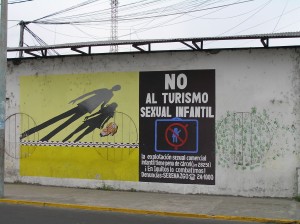 Child sex tourism is one of many forms of child exploitation and abuse. The majority of sex tourists are adult males from more industrialized countries. They travel to lesser developed countries where laws are often not enforced and sex is relatively cheap and readily available. The U.S. is one of the major source countries of sex tourists, as well as Japan and Australia. Child sex tourism is especially prevalent in Asia and Central and South America – Thailand, Cambodia, and Costa Rica are among the most popular sex tourist destinations. A recent report shows that Americans make up an estimated 25% of all sex tourists in the world. The global sex industry is fueled by nearly two million children. Also, 80% of the sex tourists in Costa Rica and 38% in Cambodia are American males.
Although child sex tourism is more prevalent in lesser developed countries, tourists from almost every country in the world finance the sex industry and fuel the demand for young children. The steps taken by globally renowned companies such as Delta Air Lines and Hilton Worldwide, Inc. are a significant advancement in bringing more awareness to the issue.
Sex Traffickers and Pimps: the Real Winners of the World Cup
Brazil: one of the best destinations in the world. Great people. Beautiful beaches. Rain forests. An abundance of adventures to be had. The question is: what isn’t amazing about Brazil? The sad truth is that human trafficking and sexual exploitation is a major problem in this vacation spot. According to the State Department Trafficking in Persons Report, sex trafficking of Brazilian citizens within and across the country’s borders flourishes. The United Nations Office on Drugs and Crime stated that there is an outrageous industry of child sex tourism and child prostitution in Brazil; “According to a January 2005 report, child prostitution rings operate in 937 municipalities throughout the country.” It doesn’t seem asthough it could get much worse. However, after Spain came out victorious last year in the FIFA World Cup, Brazil was named as the next host of this colossal event in 2014. Unfortunately, this great honor brings booming business for the sex industry.
Right before the World Cup took place in Germany and South Africa, several anti-trafficking and human rights groups spoke up about the increased sexual exploitation that would take place during the tournaments. They encouraged the government and law enforcement agencies to step up and keep a watchful eye. Amnesty International and Human Trafficking.org estimated that between 30,000 and 60,000 children and women would be sexually exploited during the World Cup in Germany. ESPN’s Outside the Lines investigation on the effects of the South Africa World Cup on human trafficking found “more young people have been trafficked either into South Africa from other countries or internally to work in a rapidly growing sex industry because of the month long soccer tournament.” Time Magazine cited a trafficker in South Africa gloating about the anticipated increase in business, “Yeah, this is good! Us people are going to make a lot of money then if you know what you’re doing.” There was criticism of too much hype surrounding the problem and inflated numbers of trafficked victims but that does not negate the correlation between the World Cup and sexual exploitation. The Outside the Lines article above reiterated the words of an ordained minister who runs the conservative Family Policy Institute, “Sex traffickers see the World Cup as an once-in-a-lifetime opportunity to ‘cash in.’”
 Advocates of the anti-trafficking movement will once more begin to voice their concerns about the 2014 FIFA World Cup. The importance of soccer in Brazil will likely increase the tournament’s attendance and subsequently the number of customers for trafficking victims. As mentioned earlier, Brazil already boasts a thriving tourism industry and this World Cup could draw more U.S. attendees than normal because of its proximity. We are looking to determined anti-trafficking advocates and dedicated law enforcement officials to lead the charge in this monstrous challenge to make sure traffickers aren’t the real winners at the 2014 FIFA World Cup.
I’m Not Buying It – Promoting Zero Tolerance for Buying Children for Sex at the Super Bowl
An American tradition since 1967, the NFL Super Bowl can easily be described as the biggest, wildest, most passionate, most glorified, and most flamboyant display of team loyalty of the year. On February 6, 2011, the play off of all play offs will be held in Arlington, TX at the infamous Cowboy’s Stadium which can hold up to 110,000 people. Between the crazy parties, the swarms of football fans, and the weeks of chaos leading up to this grand event, there is little room for error when it comes to protecting innocent children from being commercially sexually exploited by Super Bowl fans.
 Traffick911, Shared Hope International, and other advocates have partnered for the national I’m Not Buying It Super Bowl campaign, launched on January 7, 2011. The campaign aims to raise awareness and deter the purchase of children for sex during Super Bowl XLV.
While throngs of football fans are looking for a good time, some seek to commit the heinous crime of purchasing sex with a minor. This demand drives traffickers to recruit and transport women, teens, and children to the area to be used by fans for commercial sex acts—producing millions of dollars in profit for the trafficker. Local groups are already seeing the effect of this market dynamic as thousands of prostituted victims are being transported to the area with even more expected to arrive for Super Bowl XLV, according to recent research by The Shapiro Law Firm and the Dallas Women’s Foundation. They released a study this month revealing that as many as 740 underage minors are trafficked statewide every month.
We’ve issued a zero tolerance policy for child sex trafficking at the Super Bowl this year. Thankfully, a few other organizations have joined us in this stance, including local law enforcement.
The area is uniting over this cause as billboards go up and police crack down. One billboard targets buyers by showing the mug shots of four convicted men who tried to buy sex in Arlington above the words “Dear John, You Never Know! This Could Be You.” If the prospect of being publicly humiliated doesn’t deter potential buyers, then perhaps they’ll run into one of the many police stings set up by Arlington Police Department.
With February 6 just around the corner, America’s youth need us to unite more than ever and take a stand for their freedom because pimps and “johns” certainly won’t. Join the I’m Not Buying Itcampaign to spread awareness and protect children from being enslaved in the commercial sex market this Super Bowl season. Get started by signing a petition to ask the Super Bowl Host Committee to endorse the I’m Not Buying Campaign. Your signature makes a difference.
*If you see a child in danger, dial 911 or contact the police immediately. You can also call the National Human Trafficking Hotline at 1-888-373-7888.
Oregon Receives Dangerously Low Grade for Child Sex Trafficking Laws
Portland, Oregon, often referred to as “Pornland”, has earned a reputation for having the largest legal sex industry per capita in the nation, even compared to Las Vegas. One Portland directory lists 40 erotic dance clubs, 47 all-nude strip clubs, 35 adult businesses and 21 lingerie modeling shops and most of these businesses are stacked conveniently on 82nd Avenue. Numerous child victims have revealed they were groomed by their pimps and ultimately advertised for purchase through these legal sex markets. In 2009, the Sexual Assault Resource Center served at least 75 victims of trafficking. Is Portland one of the most dangerous cities for children in America?
Despite the mounting negative press, the leadership of Portland is confronting this issue head on. Mayor Sam Adams recently stated
“Human trafficking, and especially juvenile human trafficking, goes against everything this city believes in and stands for, and we must do much more to combat the causes and symptoms of this problem.”
And it’s not all talk. City Commissioner Dan Saltzman, recently sponsored a resolution that was approved by the council to dedicate assets seized from pimps and their customers to shelter and services for victims. In a downtrodden economic environment, it’s a brilliant and fitting idea to make pimps and buyers foot the bill for the victims they create.
However, according to the Protected Innocence Oregon Report Card, which landed Oregon a “D”, there is clearly more work to be done. The Protected Innocence Legislative Framework outlines six areas of law critical to protecting and responding to child sex trafficking. The Report Card identified several areas of Oregon law that should be applauded for its strength such as the strong investigative tools provided to law enforcement to combat the crime of trafficking. This lightens the responsibility of the child victim as the primary witness in a case. Additionally, Oregon’s broad child abuse and neglect statues allows for a child protection response rather than a delinquency response. The Report Card provides legislators, community advocates, students, and professionals with a road map of the changes necessary to ensure protection for the victims and punishment for the criminals who exploit them.
The Oregon Report Card outlines four critical legislative changes needed:
– Amend the state human trafficking law to align with the federal Trafficking Victims Protection Act by eliminating the requirement of force in cases of child sex trafficking.
– Amend the sex offender registry law to require convicted traffickers and buyers of child sex trafficking victims to register as sex offenders.
– Make buying or attempting to buy sex with a minor a separate crime from solicitation of an adult for prostitution and reference the trafficking in persons statute as the applicable crime and penalty. Currently, the law on solicitation of prostitution does not differentiate adults from a minor and is a misdemeanor – regardless of age.
– Amend “rape shield” law to include the victim-witnesses of compelled prostitution or sex trafficking so they are not left unprotected from a re-traumatizing examination when they testify. As in other sexual offense cases, evidence of a victim’s past sexual behavior should not be admissible.
These are changes that legislators can make right now. Let’s lend our voice to advocate for those who have been silenced through sexual slavery. Getting a “D” on the protection of children from traffickers is not acceptable! Legislators are stepping up to the plate, let’s encourage them to follow through on their commitment to make Oregon a safe place for children. Those stuck in sexual slavery are counting on you to make a difference!