Don’t worry about picking up school supplies or studying for exams…this isn’t your average school.
On March 29, 2011, the Colorado Senate passed Senate Bill 85 which will create a first offender program, in other words a “John school,” that will make it possible for those put on trial for soliciting, pandering, or patronizing a prostitute to wipe their records clean of the offense. The prostitution-related charge will be dismissed as long as it is the offender’s first offense, the offender pleas guilty to the offense, pays the $5,000–10,000 fine and completes the program. Reservations about this bill and similar legislation stems from the question of whether or not first offender programs (John schools) are effective. Do “John schools” really reform buyers and can they do the same with traffickers and pimps? Moreover, is it sufficient punishment for the harm the offender imposed on the victim?
According to a 2010 article by the Chicago Alliance Against Sexual Exploitation (CAASE), “John schools” sprung up in the mid-1990s to deter buyers of commercial sex from repeating the offense in the future by educating them about the risks and societal implications their actions create. They educate “Johns” about many aspects of prostitution by including information on the laws, health risks, and testimonies from survivors.
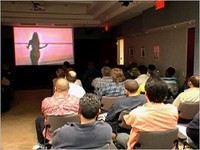 In 2008, Apt Associates Inc. conducted research on the efficacy of “John schools” and found positive results overall, including a decline in recidivism rates (number of repeat offenders). The study claimed that first offender programs were cost-effective, sustainable, and transferable (could be replicated in another area). Unfortunately, however, “post-class survey suggests that the program effectively informed johns about the consequences of participating in prostitution, but did not significantly lower the self-reported likelihood of soliciting in the future.” Several other studies revealed the same conclusions.
Conversely, some experts say there is not enough evidence to determine the effectiveness of “John schools.” CAASE, Prostitution Research and Education, and the Chicago Coalitionfor the Homeless conducted a study in 2008 that entailed interviews with 113 men who bought sex and found that only 41% believed that “John school” acted as a sufficient deterrent to demand for commercial sex. Men stated the top deterrents from purchasing sex would be: photo/name in the local paper (87%), jail time (83%), or photo/name on a billboard (83%). Texas used this approach during the 2011 Super Bowl– posting mug shots of men convicted of trying to purchase sex in Arlington on a billboard near the Super Bowl stadium. The study recommends that “John schools,” in order to be more effective, should include individual sessions on a long-term basis between buyers and clinical practitioners.
The effectiveness of “John schools” is a dynamic debate in which the proven lower recidivism rates stand in stark contrast to “John school” graduates continued willingness to purchase sex. Stay posted as we announce future research and demand reduction efforts.
 Advocates of the anti-trafficking movement will once more begin to voice their concerns about the 2014 FIFA World Cup. The importance of soccer in Brazil will likely increase the tournament’s attendance and subsequently the number of customers for trafficking victims. As mentioned earlier, Brazil already boasts a thriving tourism industry and this World Cup could draw more U.S. attendees than normal because of its proximity. We are looking to determined anti-trafficking advocates and dedicated law enforcement officials to lead the charge in this monstrous challenge to make sure traffickers aren’t the real winners at the 2014 FIFA World Cup.
 While there is research documenting how pimps
 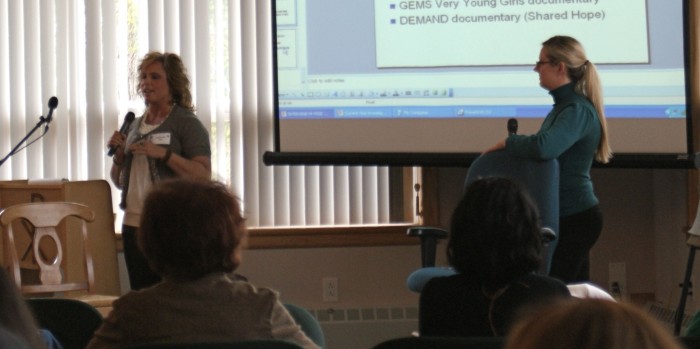 Shared Hope was joined by District Attorney John Adams, Representative David Maloney, Detective Lee Wiley from the Montgomery Police Department, Julie Janovsky from Polaris Project, and survivor Jennifer Spry. Detective Wiley shared local stories, techniques and information on DMST, while Ms. Janovsky focused on law and policy. The testimony given by Ms. Spry was so powerful that it wrapped up with a standing ovation!