Shared Hope International

Leading a worldwide effort to eradicate sexual slavery...one life at a time

  • The Problem
    • What is Sex Trafficking?
    • FAQs
    • Glossary of Terms
  • What We Do
    • Prevent
      • Training
      • Awareness
    • Restore
      • Programs
      • 3rd Party Service Providers
      • Stories of Hope
      • Partners
    • Bring Justice:Institute for Justice & Advocacy
      • Research
      • Report Cards
      • Training
      • Advocacy
  • Resources
    • All Resources
    • Internet Safety
    • Policy Research and Resources
    • Store
  • Take Action
    • Activism
    • Advocate
    • Just Like Me
    • Volunteer
    • Give
  • News&Events
    • Blog & Events
    • Media Center
    • Request a Speaker
    • Host an Event
    • Attend an Event
  • About
    • Our Mission and Values
    • Our Story
    • Financial Accountability
    • 2024 Annual Report
    • Leadership
    • Join Our Team
    • Contact Us
  • Conference
  • Donate
Home>Latest News

August 9, 2025 by SHI Staff

The Diddy Verdict Revealed America’s Dangerous Blind Spot About Trafficking 

An anti-trafficking expert explains what the jury missed—and how you can help others learn what to look for

Part 1 of “The Diddy Verdict Wasn’t the End” series 

“From the moment I knew Diddy was being accused of sex trafficking, I thought: he won’t go to jail for it.” 

Mikayla Simeral’s prediction wasn’t cynicism—it was expertise. As Director of Training Advancement at Shared Hope International, she brings a unique perspective shaped by years of direct field experience working hands-on with survivors of domestic minor sex trafficking. Her background in social work, combined with her MA in Ethnomusicology, gives her a culturally competent lens for understanding how trafficking manifests across different communities—and how to train thousands of law enforcement officers, educators, and social workers to recognize what trafficking actually looks like in America. 

Unfortunately, she was right about Diddy. And the verdict reveals exactly why traffickers keep walking free. 

The Hollywood Myth  

During the trial, Simeral watched people on social media struggling with the charges, observing they “didn’t understand the sex trafficking charges” because trafficking, to them, meant “transporting people across borders.” 

“I actually chimed in and said, ‘No, someone does not need to be moved across a border for it to be considered trafficking,'” Simeral recalls. “There was an exchange of goods for sex acts. Whether they could say it was consensual or not consensual—that’s where it got messy.” 

This Hollywood-influenced understanding of trafficking—reinforced by films like “Taken” and “Sound of Freedom”—has created a dangerous blind spot. Under federal law, sex trafficking requires only that someone recruit, entice, harbor, transport, provide, obtain, or maintain a person for commercial sex through force, fraud, or coercion. No borders need to be crossed. No kidnapping need occur. 

“People think trafficking is like, ‘Oh, well, Diddy didn’t bring a bunch of girls across the border on a freighter,'” Simeral explains. “They didn’t understand the intricacies of how simple it can be in our country.” 

Power and Control 

The Diddy case represented a textbook example of how celebrity status transforms into a trafficking tool. “He’s potentially one of the most powerful hip-hop moguls in our culture,” Simeral notes. “Within the music industry, so many people wanted to be associated with him because they knew that could potentially launch their career.” 

This created what trafficking experts call the “power and control wheel.” People came forward describing an impossible choice: comply with Diddy’s demands or lose everything. 

“People would say, ‘Of course I would do anything he told me to do. If I crossed him, I’m out. There goes my career. There goes my potential in life,'” she explains. “[In the world of commercial music] When people are so starved for success and fame, a lot of people will do anything.” 

The Trauma Bond That Confuses Juries 

Perhaps no aspect of trafficking is more misunderstood than why victims defend their abusers. Simeral watched this play out in the Diddy case and has seen it countless times in her work with survivors. 

“A lot of jurors missed the intricacies of trauma bonding,” she explains. “Survivors, when they’re trauma bonded, will act “normal” with their offender because they don’t want to get in more trouble. They want to keep the trafficker as calm as possible so they don’t catch any heat.” 

This creates a devastating paradox: victims who appear compliant, even protective of their traffickers, are often those who have been most thoroughly controlled. During an interview about the intricacies of trauma-bonding, a survivor once told Simeral: “They can beat the mess out of you, but let them do one nice thing for you, and you melt.” 

Traffickers exploit this systematically, painting pictures of future success while isolating victims from other support systems. “They’re told, ‘We just have to push through, do these dates, make this money, then we’ll start a business, then we’ll start our dream life together,'” Simeral explains. For many victims, the trafficking relationship becomes their entire social world by the design of the trafficker.  

The Myth of Choice 

American culture’s emphasis on individual responsibility creates another barrier. Juries want to believe that adults engaging in commercial sex have made informed choices. 

“Americans want to say, ‘That’s your choice. You want to go have sex with people and party, that’s your choice,'” Simeral observes. But this fundamentally misunderstands trafficking. 

Drawing on her field experience, Simeral offers a powerful analogy: “There’s no waiver to get into trafficking. It’s not like they become an escort and there’s a competitive benefits package with a 401K, where they’re signing an employment agreement saying, ‘I consent to being beaten. I consent to having my nose broken, having sex with 20 people a day, and only keeping 10% of my wages.’ No one ever signs a waiver that says that.” 

Most adult survivors Simeral worked with entered the commercial sex industry as minors, often aging out of foster care with no other options. “They would say, ‘I want to go be an escort, Miss Mikayla, I want to go work at the club, because that’s all I know how to do. That’s all I know I’m good at.”  

What the Jury Missed That Every American Needs to Know 

Drawing from her training experience and direct work with trafficking survivors, Simeral emphasizes what juries consistently miss: the ability to see through surface-level compliance to the coercion beneath. 

“I knew all the girls I was working with were trafficked,” she concludes. “Even if a 15-year-old was defending her 35-year-old boyfriend, I knew better. I knew to ask the right questions.” 

When Simeral worked with young survivors, she didn’t accept explanations at face value. Instead, she asked probing questions: “Tell me more about your boyfriend. Where did you meet him? When was the first time you guys were intimate together? Did you want to be intimate with him?” These questions, informed by understanding trauma bonding and grooming patterns, revealed the truth that surface conversations concealed. 

This is the training gap that the Diddy jury exposed—the difference between what trained professionals recognize and what ordinary citizens understand about trafficking dynamics. 

The Solution: Education That Changes Outcomes 

“Every single person in America needs to be educated on what trafficking looks like in our country,” Simeral insists. “People see it as a distant problem, a foreign thing. Not so much here.” 

The reality is different. Digital technology has transformed how traffickers recruit victims. “Kids can meet an older person, they’re being recruited and groomed through a game, through apps. They think they’re in this safe, fun relationship, then they’re meeting up for dates, then they’re being sold to other people.” 

Without proper education, even well-intentioned jurors struggle to distinguish between consensual relationships and exploitative ones. 

The training programs that Simeral develops—like Shared Hope’s 90-minute “Exploited ” online course—draw from her micro-level experience working directly with survivors in Florida and her macro-level understanding of how to create culturally competent education. “If one day you find yourself on a jury with an abuser or offender, you would be able to recognize the signs and see through things that are presented as consensual,” she explains. 

From Verdict to Action 

“I felt powerless in the outcomes,” Simeral admits. “It’s very sad that now we’ve come to a point where the general public kind of feels like they can’t make a difference in holding offenders accountable.” 

But powerlessness isn’t the answer. The question isn’t whether trafficking is happening in communities across America—it’s whether those communities will be equipped to recognize it when they see it. 

“I would challenge people to push into it more and say, ‘What could this look like in my town, my state, my country?’ Do that to better protect young people in this next generation.” 

The Diddy verdict wasn’t the end—it was a wake-up call. The same education that could have changed this outcome is available to every American today. The recognition that trained professionals have—that trafficking hides in plain sight, that victims often protect their abusers, and that justice requires more than surface-level judgments—can be learned. 

Take Action: Be Part of the Solution 

🎓 Take the FREE Exploited Training
Shared Hope International’s 90-minute training teaches you to recognize trafficking in your community and understand what juries are missing. Perfect for parents, educators, community leaders, and anyone who wants to make a difference. https://store.sharedhope.org/product/exploited/ 

📚 Bring Resources to Your Community
Schools, libraries, and community centers need trafficking education materials. Contact Shared Hope International to learn how to introduce these life-saving resources to your local institutions. https://sharedhope.org/resources/ 

🎙️ Learn from the Experts
Watch Shared Hope’s Invading the Darkness podcast to hear directly from survivors and professionals, like Mikayla, who have trained thousands of individuals to recognize the signs of trafficking. These insights provide the context that transforms statistics into understanding.
https://invadingthedarkness.buzzsprout.com/1784950/episodes 

📊 Know Your State’s Progress
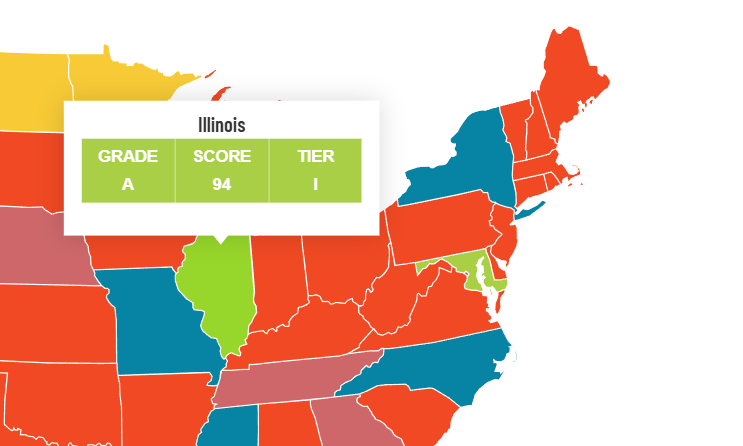
Get your state’s 2025 report card to see how your community measures up and where advocacy is needed most.
https://go.sharedhope.org/reportcards-facebook 


July 16, 2025 by Guest

New Rights4girls Research

Rev. Dr. Marian Hatcher 
Shared Hope Policy Consultant 

Shared Hope International (SHI) has focused on demand deterrence and victim centered responses since its inception—clear-sighted that ending sex trafficking requires emphasis on both. One of the earliest research reports published by SHI, in association with the Hickey Foundation and Arizona State University, was the Demanding Justice Report in2014. This addressed demand for sex acts from children as well as enforcement efforts related to Commercial Sexual Exploitation of Children (CSEC).

That same year, I was privileged to be the recipient of the Pathbreaker Award for “determined leadership in pursuing the buyers of sex trafficking” on behalf of the Office of the County Sheriff, Thomas J. Dart. Since then, Shared Hope has continued to advocate for demand reduction, in particular by ensuring that laws against trafficking children and CSEC unambiguously include buyer conduct and include meaningful penalties to stifle demand.

This past January, Shared Hope ally Rights4Girls published new “Buyers Unmasked” research. As a survivor leader and expert on demand reduction, this was music to my ears! Not only did the release resonate with me as one who has participated in research of this type in the past, it resonated because it finally offered what survivors know all to personally: a look into the type of men who buy sex and the horrific impact they cause marginalized women and girls.

Demand is buyer driven, fueling and financing an industry built on intimidation, violence and lack of personal autonomy. The report uses the buyers own words to make clear their motivation and lack of concern or remorse for the buying of sex acts. I have personal experience with this, not only as a survivor, but as a civilian member of law enforcement.

From 2011 to 2019 I was responsible for coordinating the Cook County Sheriff’s Office National Johns Suppression Initiative. In that role I saw not only trends and attitudes, but the cooccurring dangers and criminal activities associated with sex buying.

Buyers would sometimes have children, even infants with them when to trying to purchase sex. I remember a buyer left his seven year old daughter in the car while they went into the motel. Another had an infant in the backseat while a loaded weapon was in the front seat.

While difficult to read, the sex buyers in this report reflect a community far from Hollywood’s Pretty Woman fairytale but rather embody the disturbing mantra of ‘your body, my choice.’ Their words reveal them to be fully aware and indifferent to signs of violence, trafficking, coercion, substance abuse and desperation in the women and girls they purchase for sex.”

Yasmin Vafa, Executive Director-Rights4Girls

Having collaborated with Yasmin since 2016, this report is a breath of fresh air. It addresses problems with the solution of the “Full Decriminalization” model which I have long espoused. This approach does not control or constrict the sex trade, it expands it trying to meet the supply. Fallout increases sex trafficking of adults and minors as well as increases organized crime.

The solution offered in the report is the “Survivor Model”, also referred to as the Swedish model, Nordic Model and Equality Model. The Survivor Model is in my opinion appropriate, as we are looking how we can best provide a solution for those involved in the sex trade to find their way out. The solution requires 1) exit strategies, 2) end exploitation by targeting demand for prostitution.

This report provides a roadmap that is hopeful, aligning with my personal and professional beliefs as a survivor leader as well as Shared Hope International’s principles. We look forward to partnering with Rights4Girls supporting this effort.

Don’t miss this opportunity to hear directly from Yasmin Vafa, Executive Director of Rights4Girls, at the Closing Plenary of JuST 2025:
“Buyers Unmasked: Exposing the Men Who Buy Sex & Solutions to End Exploitation.”

🔗 Register now for JuST 2025: Get Your Seat 


June 25, 2025 by Guest

Sean (P Diddy) Combs Arrest: Response from a Survivor Leader

Rev. Dr. Marian Hatcher 
Shared Hope Policy Consultant 

First, I must state as a retired civilian member of law enforcement, Mr. Combs is of course innocent until proven guilty in a court of law.

The charges are grave and pierce my soul as a survivor of sex trafficking and substance use disorder. They include racketeering conspiracy, sex trafficking and transportation to engage in prostitution (the Mann Act). All for the pleasure of an organized crime boss. Living above the law. What is alleged is horrific and triggering for those of us who suffered atrocities such as those outlined in the unsealed indictment.

Unfortunately, in the age of the internet many instances of what is alleged to have taken place is seen in video and pictures. While horrible to watch, they have yet to be proven as criminal acts, and many are obviously manipulated to implicate others.

Criminal enterprises are built on the backs of willing and unwilling participants. Many are victims of sexual and labor abuses. They can also be ordered to procure and dispense illegal items such as weapons, narcotics and more.

I was discussing Sean Combs’ arrest with a good friend, Doug Gilmer, President of Resolved Strategies LLC, and retired federal law enforcement leader at Homeland Security Investigations. We commiserated that as we focus on the carnage of the Sean Combs case, there is always more. Doug said,

“Homeland Security Investigations is leading the Sean Combs case, just as they did with R. Kelly. Big name cases, right? But they aren’t the only cases. In fact, during this past year, HSI has also identified and provided services to well over 700 other HT victims, initiated about 1400 new cases, made over 3600 human trafficking arrests, seen over 1000 indictments, and about 630 human trafficking convictions. This is just one federal law agency; it doesn’t include the work being done by state and local agencies across the country. HSI’s numbers are just a fraction of what is really out there. Meanwhile, everyone is focused on Sean Combs. It’s sensational. But guess what? The suspects are not all R Kelly’s and P Diddy’s. Some are gang members, but many others are schoolteachers, community leaders, and family members engaged in trafficking. The victims are young and old, are from every socio-economic class, every ethnicity, both foreign and U.S. citizens.” [Stats from the Homeland Security Investigations and the DHS Center for Countering Human Trafficking.]

Spanning decades, men and women alike are alleged to have endured prolonged abuse. The testimony by Cassandra “Cassie” Ventura, was four days of heart wrenching details of violence, manipulation and coercion. She bravely shared her dehumanization, aware of the victim blaming to come. In the later stages of her third pregnancy, she did for herself and others what was necessary and held Sean Combs accountable.

The common thread of all of this is societal numbness, the normality of this lifestyle. The pervasiveness. There are ecosystems of criminal and exploitive threads in our society that do not protect minors or adults. We must strive to address the willingness to ignore or accept, depending on which way you look at it, the lifestyle described above which exists in hiding and/or glaringly in our face. No one should have the opportunity or privilege to act with impunity, stripping victims of their dignity, respect and liberty. We must continue to bring all manner of bad actors to justice.

March 24, 2025 by Guest

Survivors forced to commit crimes deserve justice through the Trafficking Survivors Relief Act

Rev. Dr. Marian Hatcher
Shared Hope Policy Consultant

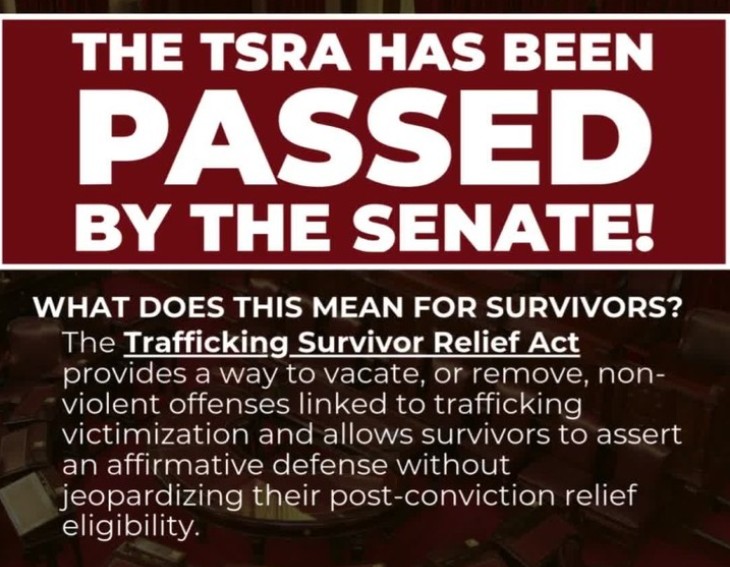
Great news, the Trafficking Survivors Relief Act (TSRA) H7139 has been introduced by Rep. Russell Fry (R-SC-7) in the 119th Congress. Although it stalled at the close of the 118th Congress, it now has strong bipartisan sponsorship with more than 50 sponsors. Once passed by the House, Senator Hyde-Smith (R-MS) is expected to lead in the Senate. The bill provides relief for survivors who were forced to commit federal crimes (misdemeanors or felonies) by their traffickers in order to survive their trafficking situation—the so-called, victim/offender.

This gives great hope to those of us who for years have been engaged in the difficult—yes, even contentious process of making progress in the anti-trafficking movement.

While the movement itself tends to be made up of silos with differing perspectives and missions and competition for funding, it is also occupied by the polarizing impact of those working to legalize the human rights violation that is called the “sex trade”.

After all, legalizing the selling and buying of sex certainly unburdens society’s collective conscience in matters of survivor recovery, let alone the pursuit of legislative efforts to provide direct services, programs, restoration of rights etc., to survivors.

Refusing the legalization argument leads to the extremely complicated intersection of victim and offender. The TSRA is a federal remedy that acknowledges the reality that many survivors of sex trafficking have been incarcerated for crimes they were forced or coerced to commit by the trafficker or survive their trafficking situation.

I was a victim/offender in Illinois, blessed with a second chance through jail-based treatment at the Cook County Department of Women’s Justice Services. After completing my sentence, I actually became an employee of the Sheriff’s Office in 2005.  Ten years later I helped coordinate the Global Summit to End Sexual Exploitation, hosted at the Carter Center to formalize policy proposals and to honor survivors just like me.

It was at this distinguished convening, that I had the opportunity to talk directly to the 39th President of the United States about my experience as both a victim and an offender. I was humbled that I could engage on behalf of Sheriff Dart, a visionary and great humanitarian, with someone who also embodied those rare attributes.  I stated “Mr. President, I have been good for the last nine or 10 years, I work for law enforcement. I shouldn’t be a convicted felon”. President Carter shook his head in agreement and simply said “well done”.

In 2017, the Friday before Christmas I received a call from my attorney informing me that my application for Executive Clemency and Expungement was granted by then Governor Bruce Rauner.  It was the only remedy available for me, due to the narrow scope of the vacatur statute in Illinois. I am, however, grateful. It was a triggering experience to re-live my trauma to provide a detailed chronological application which basically required an apology for my own exploitation.  

It is our responsibility to survivors, known and unknown, to get the Trafficking Survivors Relief Act (TSRA) passed in the 119th Congress. The reason is simply the words below. Rest in peace sir.

“The most serious human rights violation on earth is
the abuse of women and girls, and prostitution is the foundation
for all other abuses of women and girls.” 

 Former President Jimmy Carter May 2015

More resources:

  • Unjust criminalization blog
  • TSRA fact sheet
  • TSRA Myths vs Facts
  • Tell your elected officials to support the TSRA

November 25, 2024 by Leif Larson

Shared Hope International Supports Nomination of Pam Bondi as United States Attorney General

Image

NEWS RELEASE
For immediate release

For more information, contact:
Leif Larson
Director of Communications and PR, Shared Hope International (Washington, D.C., office)
leif@sharedhope.org
202-421-3708

Shared Hope International Supports Nomination of Pam Bondi as United States Attorney General

WASHINGTON, D.C. — Shared Hope International, a leading nonprofit organization dedicated to combating human trafficking, enthusiastically supports the nomination of Pam Bondi as United States Attorney General. Bondi, the former Attorney General of Florida, has a proven track record in tackling criminal cases and advocating for policy changes to combat sex trafficking.

Linda Smith, Founder of Shared Hope International and a former member of Congress, expressed her support for Bondi’s nomination, stating, “The nomination of Pam Bondi is exactly what this country needs as we take the fight to those who traffic humans, whether in the sex or labor. We look forward to her confirmation and are confident she will bring her knowledge and experience combatting human trafficking to support the critical work of the U.S. Department of Justice.”

Bondi’s extensive experience in law enforcement and her dedication to combating human trafficking make her an ideal candidate for the position of United States Attorney General. Throughout her tenure as Florida’s Attorney General, Bondi demonstrated a strong commitment to seeking justice for victims of human trafficking.

Shared Hope International has previously collaborated with Attorney General Bondi’s office on several anti-trafficking events. Shared Hope International has provided detailed information at the request of the Florida State Resources Committee, which was developed to address the specific response mechanisms available in Florida for victims of sex trafficking.

Shared Hope International supports Bondi’s unwavering determination and passion in the fight against this heinous crime.

As United States Attorney General, Bondi will have the opportunity to further advance the fight against human trafficking on a national scale.

Shared Hope International urges the Senate to swiftly confirm Pam Bondi as the United States Attorney General, recognizing her exceptional qualifications and unwavering commitment to combating human trafficking.


# # #

About Shared Hope International 
Founded in 1998 by then-U.S. Congresswoman Linda Smith, Shared Hope International is a national nonprofit organization with a threefold mission to prevent the conditions that foster sex trafficking: prevent sex trafficking through training, awareness and collaboration; restore survivors of sex trafficking, and bring justice through legislative and policy solutions. Shared Hope engages in diverse training, intervention, and legislative activities that confront sex trafficking in communities throughout the U.S.  

  • < Previous Page
  • 1
  • 2
  • 3
  • 4
  • …
  • 121
  • Next Page >
  • What We Do
  • Newsletter Signup
  • Take Action
  • Donate
Shared Hope International
Charity Navigator Four-Star Rating

STORE | WEBINARS | REPORTCARDS | JuST CONFERENCE
 
Donate

1-866-437-5433
Facebook X Instagram YouTube Linkedin

Models Used to Protect Identities.

Copyright © 2026 Shared Hope International      |     P.O. Box 1907 Vancouver, WA 98668-1907     |     1-866-437-5433     |     Privacy Policy   |   Terms of Service

Manage your privacy
SHARED HOPE INTERNATIONAL DOES NOT SELL YOUR DATA. To provide the best experiences, we use technologies like cookies to store and/or access device information. Consenting to these technologies will allow us to process data such as browsing behavior or unique IDs on this site. Not consenting or withdrawing consent, may adversely affect certain features and functions.
Functional Always active
The technical storage or access is strictly necessary for the legitimate purpose of enabling the use of a specific service explicitly requested by the subscriber or user, or for the sole purpose of carrying out the transmission of a communication over an electronic communications network.
Preferences
The technical storage or access is necessary for the legitimate purpose of storing preferences that are not requested by the subscriber or user.
Statistics
The technical storage or access that is used exclusively for statistical purposes. The technical storage or access that is used exclusively for anonymous statistical purposes. Without a subpoena, voluntary compliance on the part of your Internet Service Provider, or additional records from a third party, information stored or retrieved for this purpose alone cannot usually be used to identify you.
Marketing
The technical storage or access is required to create user profiles to send advertising, or to track the user on a website or across several websites for similar marketing purposes.
  • Manage options
  • Manage services
  • Manage {vendor_count} vendors
  • Read more about these purposes
Manage options
  • {title}
  • {title}
  • {title}
Shared Hope InternationalLogo Header Menu
  • The Problem
    • What is Sex Trafficking?
    • FAQs
    • Glossary of Terms
  • What We Do
    • Prevent
      • Training
      • Awareness
    • Restore
      • Programs
      • 3rd Party Service Providers
      • Stories of Hope
      • Partners
    • Bring Justice:Institute for Justice & Advocacy
      • Research
      • Report Cards
      • Training
      • Advocacy
  • Resources
    • All Resources
    • Internet Safety
    • Policy Research and Resources
    • Store
  • Take Action
    • Activism
    • Advocate
    • Just Like Me
    • Volunteer
    • Give
  • News&Events
    • Blog & Events
    • Media Center
    • Request a Speaker
    • Host an Event
    • Attend an Event
  • About
    • Our Mission and Values
    • Our Story
    • Financial Accountability
    • 2024 Annual Report
    • Leadership
    • Join Our Team
    • Contact Us
  • Conference
  • Donate