

2025 Roadmap Report
Community-Based Responses as the Next Step in Anti-Trafficking Reforms
This report examines opportunities to interrupt entry points into systems and strengthen the provision and accessibility of community-based services for children and youth at risk of, or impacted by, trafficking, providing guidance on:
- Connecting youth with comprehensive services within, and outside of, systems
- Interrupting vulnerabilities (e.g., family crisis, housing insecurity)
- Reducing dependency on formal child-serving systems while supporting families and meeting the child’s holistic needs
This Report Takes A Dual Approach
Identify the Ideal
We must get to a place where we can rely on community-based responses as the first and last response to trafficking and prevent the vulnerabilities that lead to trafficking.
Identify the Now
Determine where the field is now and what processes we can begin implementing to improve responses to trafficked youth in the immediate, supporting—rather than conflicting with—the broader reform of existing system responses.
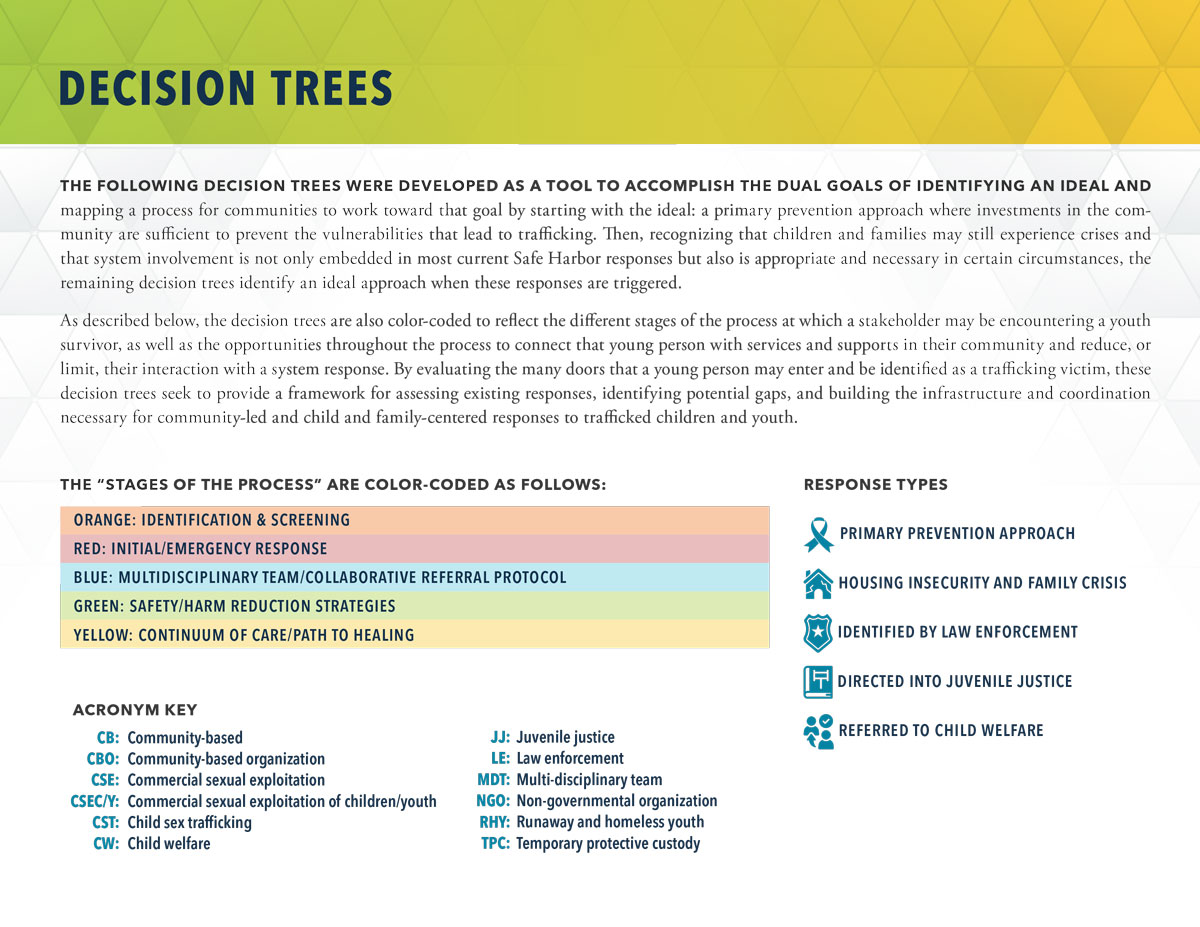
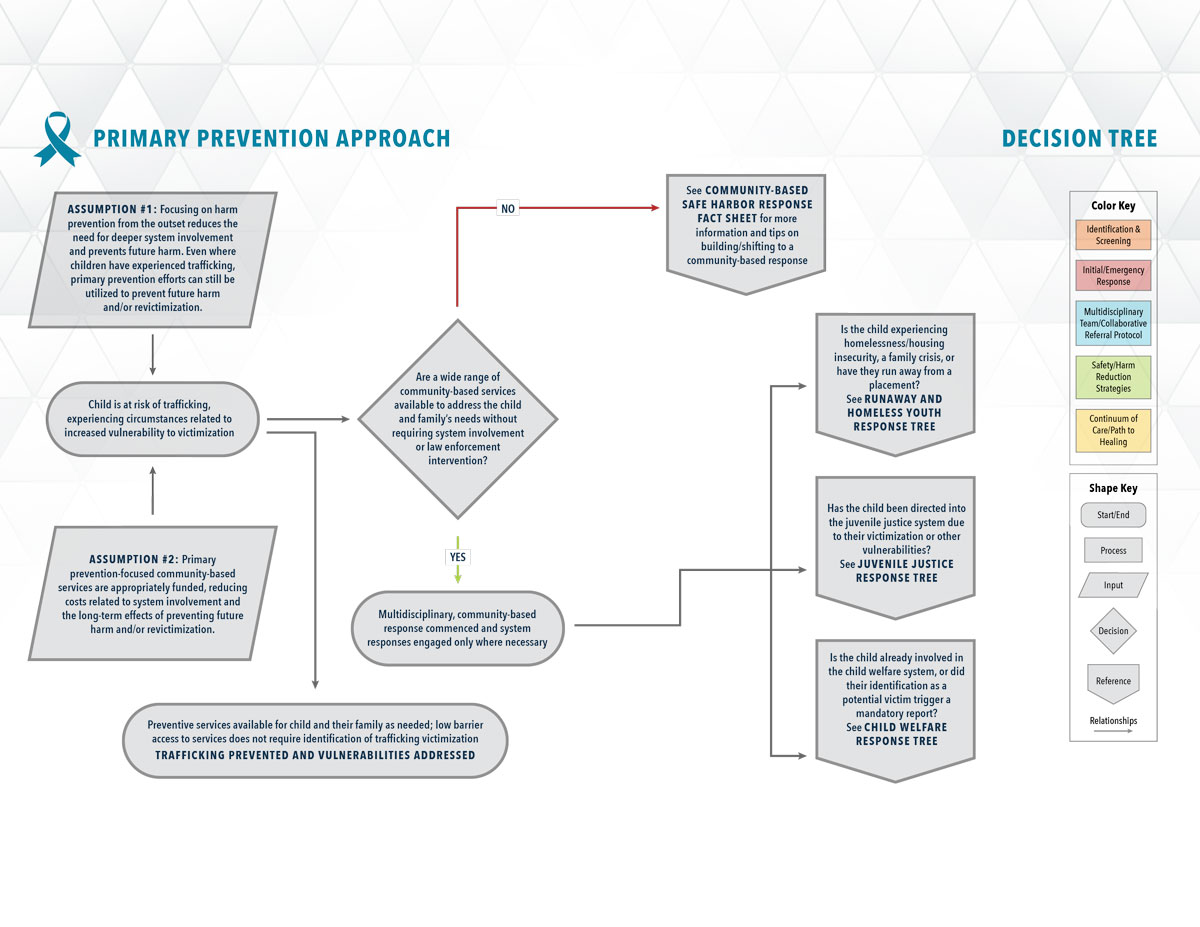
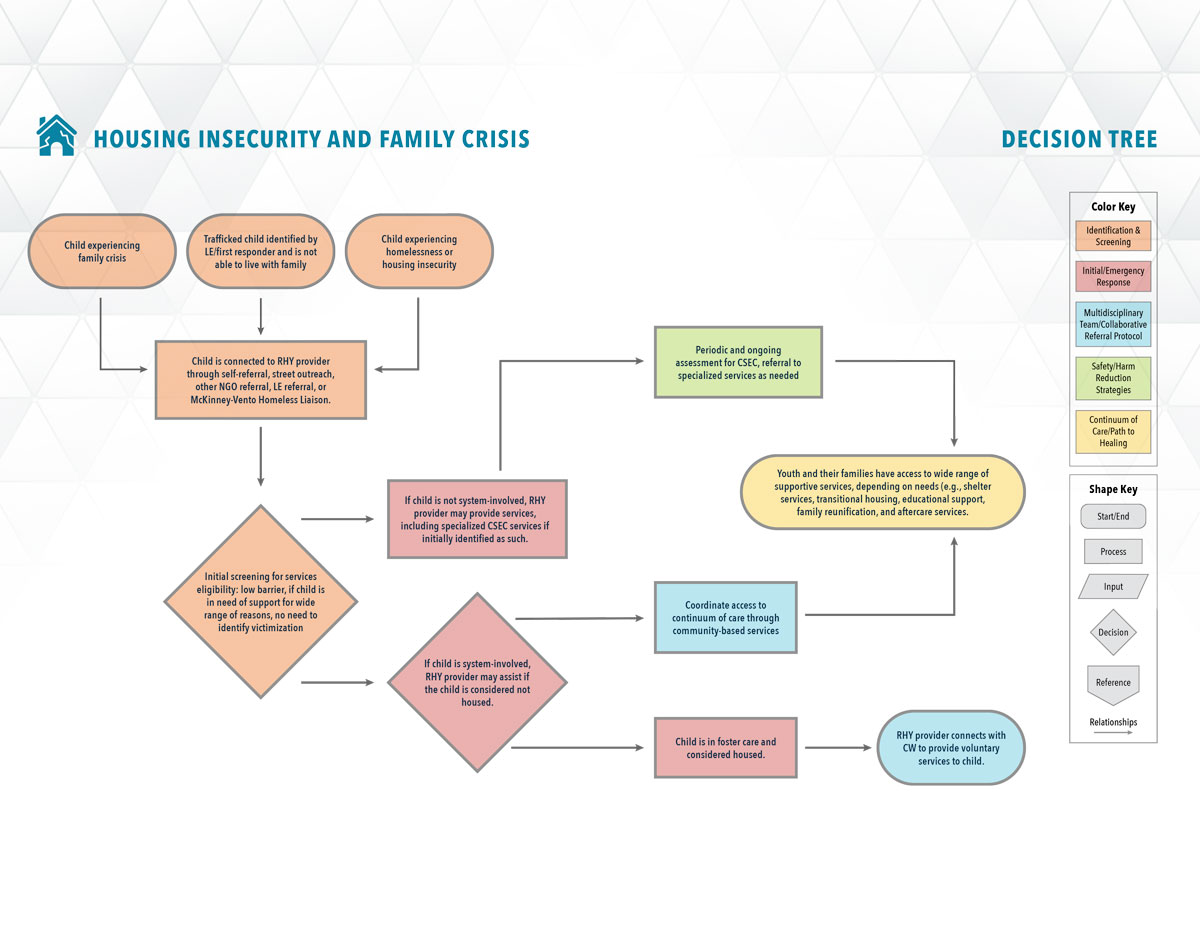
Decision Trees
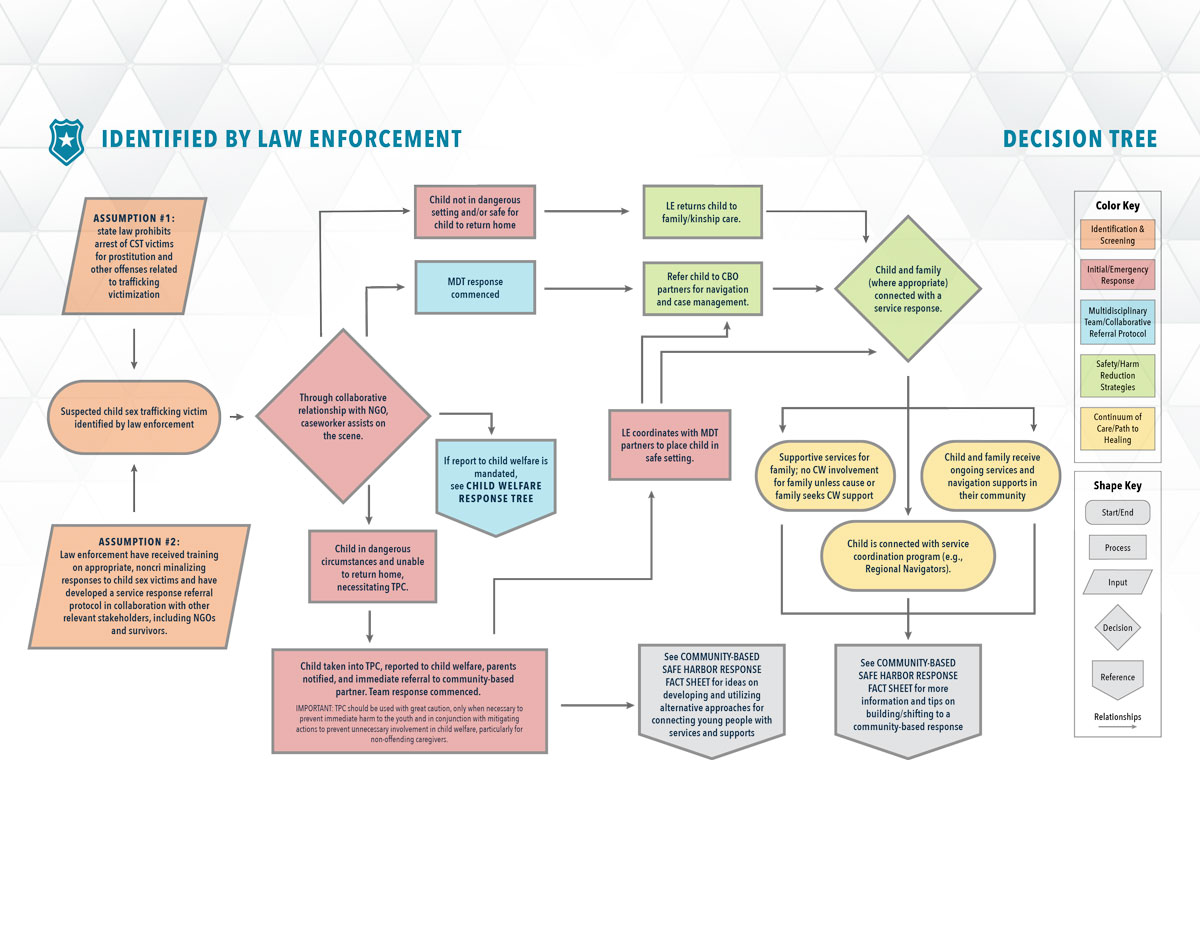
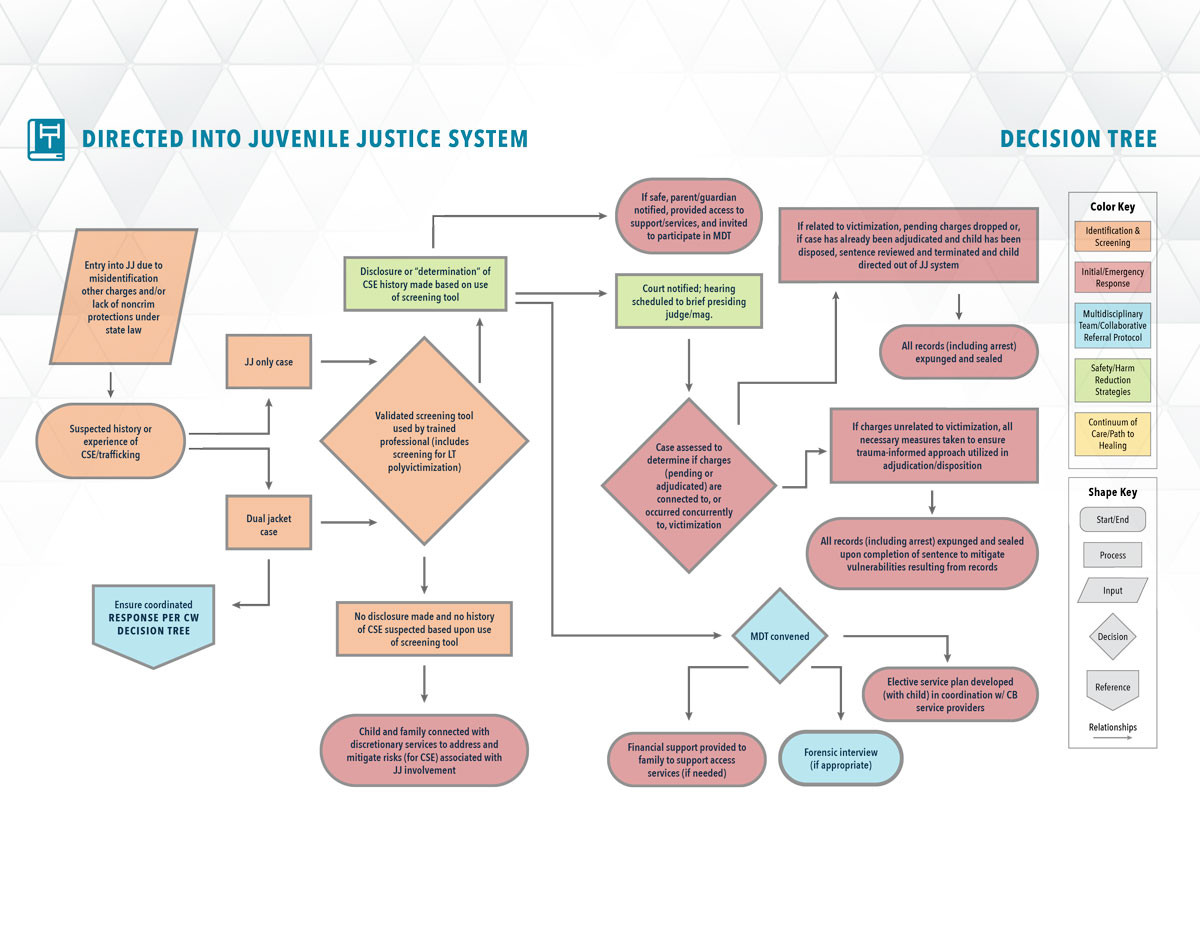
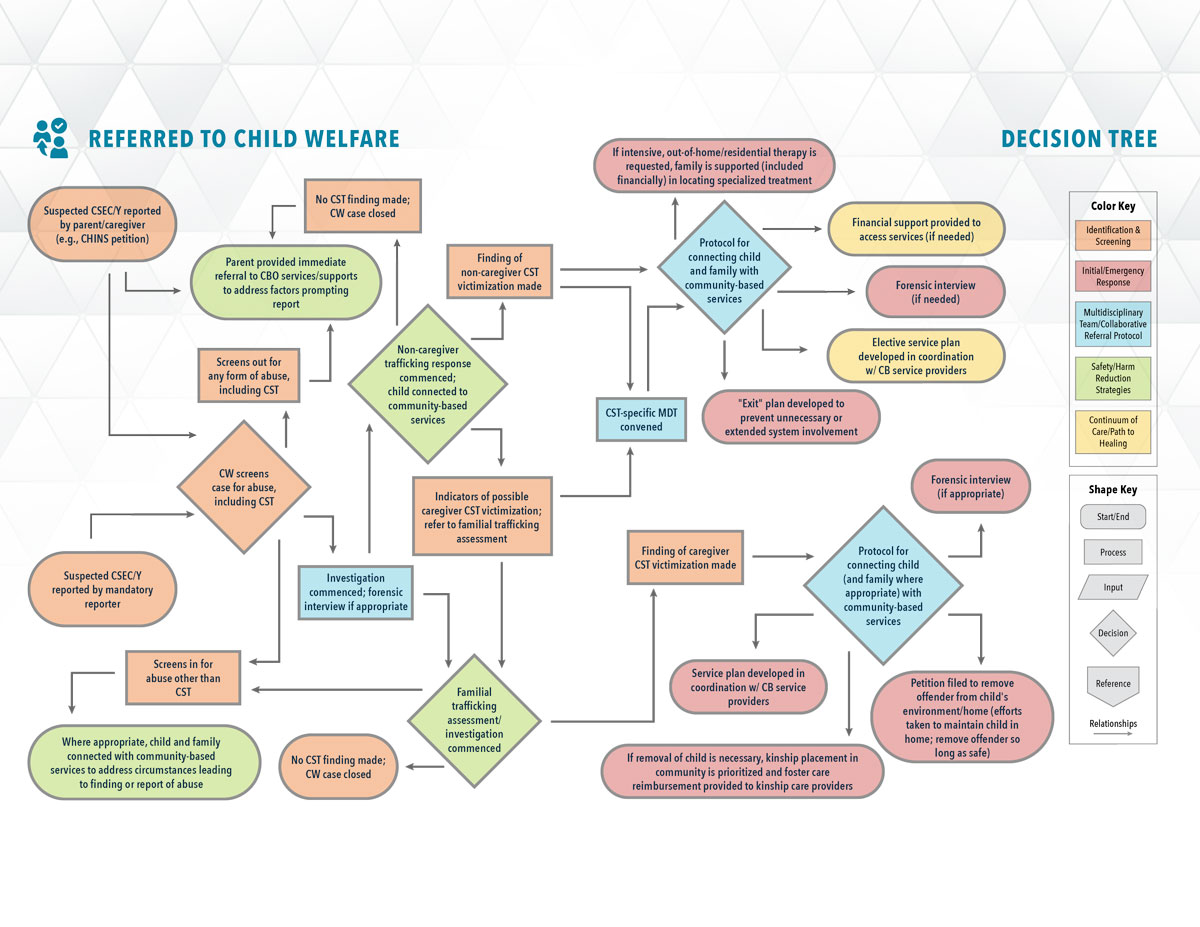
The following, customizable decision trees provide a framework for stakeholders seeking to build out community-led and child- and family-centered responses to trafficked children and youth, assessing existing responses, identifying potential gaps, and building the infrastructure and coordination necessary for a more appropriate community-based response.
Considerations for Specially Impacted Populations
Shared Hope was honored to partner with subject matter experts to develop a series of fact sheets that highlight unique considerations for responding to certain populations of trafficked youth who are more likely to experience trafficking and/or more likely to experience harm through status quo responses to trafficking. We recommend reviewing these fact sheets before, or in conjunction with, the decision trees and ensuring that ensuing responses are developed to reflect the diverse needs and identities of all youth survivors of trafficking.
JuST Response Council
The JuST Response Council a group of 30+ experts from around the country who collaborate to improve responses to juvenile sex trafficking victims, drawing on the group’s combined research, knowledge, and expertise in services, law, and policy. Members include policy advocates, government officials, medical professionals, law enforcement, judges, academics, and service providers, many of whom are themselves survivors of juvenile sex trafficking. We are deeply grateful to all Council members for ensuring this report reflects diverse perspectives and experiences.